Small Print Shops Deserve Serious Machines: Why I Don’t Gatekeep Mutoh
2026-09-22 · Elise Marceau
-
Small Print Shops Aren’t “Small” Customers
-
Argument 1: The “Big Accounts First” Rule Is Usually Wrong
-
Argument 2: Small Orders Carry Real Hidden Costs—and Real Upside
-
Argument 3: The Equipment Conversation Should Match the Job, Not the Ego
-
Counterargument: “But Small Clients Waste Time”
-
Restating the Point
Small Print Shops Aren’t “Small” Customers
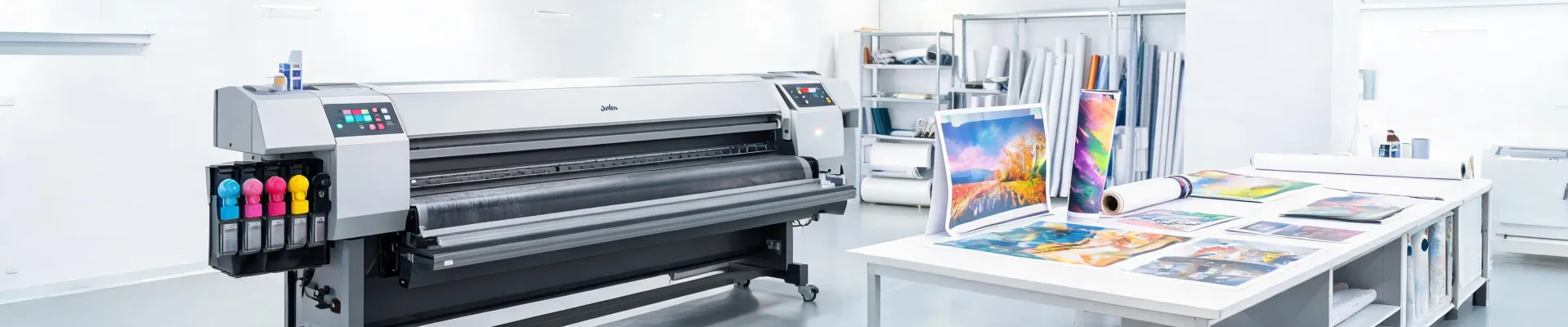
If you run a one-person DTF shop and ask me about a Mutoh for sale, I’m not going to hand you a brochure and disappear. I’ll treat you like a commercial client, because you are one.
I coordinate emergency production for a print services company. I’ve handled 200+ rush orders in 11 years, including same-day turnarounds for sign shops, garment decorators, and small manufacturers. In March 2024, a client called 36 hours before an event needing 180 DTF transfers. Normal turnaround was three days. Missing that deadline would have meant losing a $9,500 event contract. We found capacity (which, honestly, felt like winning a small lottery), paid $1,200 in rush fees on top of the $1,800 base job, and delivered with four hours to spare. The client was a two-person shop—or rather, a two-person operation with one part-time installer.
That’s why I get annoyed when the industry treats small orders as a nuisance. Small doesn’t mean unimportant—it means potential.
Argument 1: The “Big Accounts First” Rule Is Usually Wrong
Everything I’d read about scaling said triage the biggest accounts first. In practice, the small DTF and garment shops I helped in 2022–2024 became the most reliable repeat clients. They paid faster. They referred. They asked better questions. When I compared two clients side by side—one $12,000 order that ghosted after delivery, one $480 order for DTF printer inks and DTF paper printer supplies that turned into an $18,000 equipment purchase 14 months later—I finally understood why account size is a terrible predictor of account value.
So when someone asks about a Mutoh ValueJet 1638UH Mark II garment printer, I don’t start with “What’s your annual volume?” I start with “What are you printing, and what’s blocking you?” A small shop may need one reliable machine, not a fleet. That’s a valid business case. I’d argue it’s often a stronger case than a large shop adding a fifth printer it doesn’t have staff to run.
Argument 2: Small Orders Carry Real Hidden Costs—and Real Upside
Rush pricing data supports the point. Based on publicly listed prices from major online printers as of January 2025, rush premiums typically run +50–100% for next-business-day turnaround, +25–50% for 2–3 business days, and +100–200% for same-day when available. Setup fees in commercial printing—plate making, die cutting, custom Pantone colors—can add $15–$200 per job depending on complexity. Many online printers now absorb digital setup, but the hidden cost doesn’t vanish; it moves. Verify current rates before quoting, because these numbers change.
Small clients feel those costs disproportionately. A $500 order with a $150 setup hit is a 30% penalty. That’s why a good supplier shouldn’t hide behind minimums. In my opinion, the right move is to quote the small job honestly, explain the cost drivers, and let the client decide. If the client grows, you’re the vendor who didn’t ignore them at $500.
I should add: this doesn’t mean small-batch pricing equals bulk pricing. It doesn’t. Small orders usually cost more per unit. The point is service, not fake discounts. A supplier who says “no minimum” but buries the setup fee is not being friendly; they’re being unclear.
Argument 3: The Equipment Conversation Should Match the Job, Not the Ego
When a small shop asks me whether to buy a Mutoh, an HP DesignJet T630 inkjet large format printer, or something else, I ask three questions:
- What substrate and ink chemistry do you actually need?
- Who will service it when a printhead clogs on a Friday night?
- Can you verify parts and support before you buy?
A Mutoh for sale can be a strong entry point if you verify service history, printhead condition, and spare-parts availability. Mutoh’s lineup covers UV flatbed, eco-solvent, DTF, DTG, and sublimation work—so the brand can usually match a niche. Proven industrial-grade reliability is not a slogan if the dealer stocks parts and trains operators. The HP DesignJet T630 inkjet large format printer, by contrast, is often a better fit for CAD, technical documents, and general poster work. Neither is “better” in a vacuum. The job decides.
What I’d avoid is buying a machine because a forum said it was the bargain entry. Cheap hardware with no support is expensive. That’s not a Mutoh-specific warning; it applies to every brand. If you’re buying used, budget for a professional inspection. In my experience, a $300 inspection fee has saved clients from $3,000 printhead surprises. I’m not 100% sure that ratio holds for every machine class, but it’s been close for wide-format gear.
Counterargument: “But Small Clients Waste Time”
Some vendors argue that small clients ask endless questions, demand rush turnaround, and never scale. I’ve seen that. I’ve also seen large clients do the same thing with bigger invoices. My experience is based on about 200 rush orders, mostly North American print service providers under 20 employees. If you’re supplying a 500-person industrial manufacturer with six-month forecasting cycles, your screening criteria will differ.
That said, the fix isn’t to discriminate against small orders. It’s to qualify better. Ask about deadline, budget, decision authority, and repeat potential. A two-person DTF shop that pays on time and reorders DTF printer inks monthly is not a waste of time. A tire-kicker with a $50 budget and a 24-hour deadline is. The size isn’t the problem—the fit is.
Restating the Point
Small print shops deserve serious equipment and serious service. That means honest quotes on small runs, real support after the sale, and equipment advice based on the work—not on whether the client can buy five machines today. When I was starting out, the vendors who treated my $200 orders seriously are the ones I still use for $20,000 orders. I’d argue that’s not charity. It’s good business.
If you’re a small DTF or garment decorator looking at a Mutoh for sale, start with the job, verify the support, and don’t let anyone make you feel like a nuisance for asking. You’re not. You’re the next account. And if a supplier treats your first purchase like it doesn’t matter, that’s a signal—not a judgment on your business.

Elise Marceau
Elise Marceau is an LED display and digital-signage systems analyst covering LED video walls, modular screens, transparent LED, control processors, and indoor or outdoor signage. She applies IEC 62368-1 safety principles while comparing pixel pitch, luminance, contrast, refresh rate, colour uniformity, viewing angle, ingress protection, power density, module serviceability, and signal redundancy. Her specification guides help integrators, venue operators, retailers, and procurement teams align viewing distance, ambient light, content format, installation access, electrical load, and lifecycle support.