Mutoh Printer Price in 2025: Which Buying Scenario Are You Actually In?
2026-09-22 · Elise Marceau
-
There Is No Single Mutoh Printer Price
-
Scenario 1: You're Buying Production Capacity
-
Scenario 2: You're Searching for a DTF Printer in Egypt
-
Scenario 3: You're Looking at an Inkjet Hand Printer
-
Scenario 4: You Already Own a Mutoh and Need Close-Up Maintenance
-
How to Tell Which Scenario You're In
-
The Bottom Line on Mutoh Printer Price
There Is No Single Mutoh Printer Price
If you want one number for a Mutoh printer price, I'm going to disappoint you. I run procurement for a 42-person print shop. I've managed our equipment and consumables budget—about $260,000 a year—for seven years. I've negotiated with 19 vendors and tracked every PO in our cost system. The same Mutoh large format printer can land at very different numbers depending on model, ink configuration, RIP, install, training, service contract, and local support. The sticker is the start, not the answer.
Bottom line: your cost depends on which scenario you're in. I'll split it into four. I've used all four lenses at some point, and the one you skip is usually where the money leaks.
Scenario 1: You're Buying Production Capacity
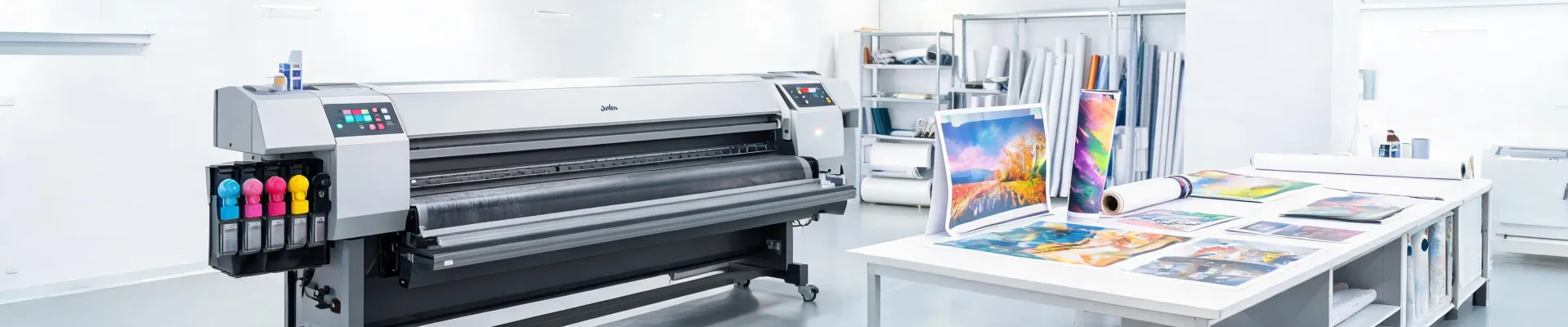
This is the classic Mutoh large format printer purchase. You're a print service provider, sign shop, or industrial manufacturer adding capacity. You care about uptime, substrate range, ink cost per square meter, and service response time.
When I compared two quotes side by side in Q2 2024—same Mutoh model family, different service bundles—I finally understood why the cheap line item is not the low-cost option. One quote was about 8% lower. It excluded installation, training, and a first-year preventive maintenance visit. The other included them. Once I added air freight for a technician, lost production during setup, and two weeks of trial-and-error, the gap flipped.
What belongs in your TCO (i.e., not just the machine price but everything that touches it):
- Machine and configuration: width, ink set, roll or flatbed, extra printheads if offered.
- Ink and media: cost per liter, cost per square meter, waste during profiling.
- RIP and workflow: license, training, color profiles.
- Installation and site prep: power, ventilation, flooring, humidity control.
- Service and parts: response time, travel charges, spare parts pricing.
- Training: operator time, production slowdown during learning.
Don't accept a ballpark service promise. Ask for a written service-level agreement. If a vendor won't put response times and parts pricing in writing, that's a red flag. It was accurate as of Q1 2025 that many equipment quotes still leave freight and install as separate line items. Verify current terms before you sign.
This worked for us, but we run two shifts with predictable demand and a local technician. If you're seasonal or far from a service hub, the calculus might be different.
Scenario 2: You're Searching for a DTF Printer in Egypt
If your keyword is dtf printer egypt, your cost problem is not the same as a domestic U.S. purchase. The quote you need is landed cost, not FOB. I haven't imported into Egypt myself, so this is where I'd verify with a local customs broker and a company that has already cleared similar equipment.
For a DTF printer in Egypt, the real budget lines usually include:
- Customs duty and VAT: classification matters. Get the HS code in writing.
- Freight and insurance: sea vs air changes both cost and cash-flow timing.
- Clearing agent fees: documentation, inspection, storage, demurrage if paperwork stalls.
- Inland transport: port to shop, including liftgate or crane if needed.
- Power and environment: voltage stability, dust, humidity. DTF powder and film are sensitive.
- Spare parts and ink: local stock or import every time? That changes downtime cost.
My gut vs data story: The numbers said go with the lower FOB quote from a distant supplier. My gut said the local support package was worth more. Later I learned the cheaper supplier had a 5-week parts lead time. That's not a deal-breaker if you keep spares. It is a deal-breaker if you're running daily orders.
For Mutoh equipment in Egypt, ask your regional distributor for a landed-cost worksheet. If they say they don't have one, ask who does. A supplier who says, 'this isn't our strength—here's who handles customs better' earns my trust for the rest of the deal.
Scenario 3: You're Looking at an Inkjet Hand Printer
This is where a lot of buyers mix categories. An inkjet hand printer is usually a handheld coder for marking boxes, pipes, pallets, or parts. It is not a Mutoh large format production printer. If you need handheld marking, buy for speed, ink adhesion, and cost per mark—not for wide-format quality.
I made this mistake early on: I asked a wide-format dealer to quote a handheld solution. They could have said yes and taken the order. Instead, they said, 'We don't specialize in that. You'll get better support from a coding specialist.' That honesty saved me a ton of frustration. It also made me trust them when we later bought a Mutoh large format printer.
If you're comparing an inkjet hand printer to a Mutoh printer price, you're comparing a bicycle to a delivery van. Both move ink. The jobs are different. Decide which job you actually have before you ask for quotes.
Scenario 4: You Already Own a Mutoh and Need Close-Up Maintenance
This is the scenario behind inkjet printer close up searches. You're not buying a machine. You're trying to keep one running. I've learned that downtime is the most expensive line item in our shop—way more than ink or media.
When I compared reactive repairs and preventive maintenance over a full year, the pattern was ugly. Reactive months had higher freight costs, more rush parts, and more overtime. Preventive months had scheduled costs, but fewer surprises. The difference was not the parts. It was the emergencies.
For Mutoh maintenance, put these in your cost tracker:
- Printhead and damper life: track hours and ink type.
- Capping station and wiper: cheap parts, expensive if ignored.
- Ink filters and lines: replace on schedule, not when quality drops.
- Environment: dust and humidity drive nozzle issues.
- Critical spares: one set of high-failure parts on the shelf.
Rush freight premiums can run +50–100% over standard for next-business-day service, based on publicly listed fee structures in 2025. That's real money. If you can avoid a rush order by keeping a $120 damper in stock, that's a no-brainer.
One caution: don't assume third-party inks are a simple cost save. If a vendor promises zero maintenance forever or compatibility with all third-party inks without issues, walk away. That's not a service claim. That's marketing.
How to Tell Which Scenario You're In
Ask these questions before you ask for a Mutoh printer price:
- Is this for production capacity? If yes, scenario 1. You need TCO, not sticker price.
- Are you importing into Egypt? If yes, add scenario 2 to any equipment quote. Landed cost or it doesn't count.
- Do you need handheld marking? If yes, scenario 3. Don't compare it to a wide-format printer.
- Are you maintaining an existing machine? If yes, scenario 4. Budget for uptime, not just parts.
If two or more apply, stack the worksheets. A DTF printer in Egypt for a production shop is scenario 1 plus scenario 2. A Mutoh owner doing close-up inspections is scenario 4 with a spare-parts budget.
Per FTC guidelines, vendor claims should be truthful and substantiated. Ask for documentation on service response times, parts availability, and ink compatibility. If they can't provide it, discount the claim.
The Bottom Line on Mutoh Printer Price
There is no universal Mutoh printer price in 2025. There is your scenario, your volume, your local support, and your tolerance for downtime. I can only speak to my context: a mid-size shop with predictable demand and a service technician within driving distance. If you're a seasonal business, a startup, or importing into a new market, your numbers will differ.
If I were doing this again, I'd build a one-page TCO sheet before I asked for a single quote. Machine, ink, media, install, training, service, parts, downtime. Then I'd compare vendors on the same page. The lowest quote would rarely be the lowest cost. That's not a sales pitch. That's just what seven years of invoices taught me.

Elise Marceau
Elise Marceau is an LED display and digital-signage systems analyst covering LED video walls, modular screens, transparent LED, control processors, and indoor or outdoor signage. She applies IEC 62368-1 safety principles while comparing pixel pitch, luminance, contrast, refresh rate, colour uniformity, viewing angle, ingress protection, power density, module serviceability, and signal redundancy. Her specification guides help integrators, venue operators, retailers, and procurement teams align viewing distance, ambient light, content format, installation access, electrical load, and lifecycle support.