The Mutoh ValueJet 1624X Price Wasn't the Real Cost: A Quality Manager's Story
2026-10-08 · Farah Rahman
March 12, 2024: The Pallet That Failed
On March 12, 2024, I was standing in our receiving bay with a nitrile glove and a rub-test kit. A pallet of 1,200 sublimation-printed textile panels had just arrived from an outsourced vendor. We were already late on a $38,000 contract for a fitness apparel brand. The buyer had asked for a Mutoh-built workflow from day one. I had approved the vendor because their samples passed. The first box failed. The ink came off with a dry rub. Not all of it. Just enough to look cheap. That was enough.
I am a quality and brand compliance manager at a mid-size print services company. I review every deliverable before it reaches customers—roughly 240 items annually. In 2024, I rejected 18% of first deliveries due to substrate mismatch, color drift, or ink resistance failures. This was one of them.
The Background: Why We Were Even Looking at Mutoh
We serve sign shops, garment decorators, and industrial manufacturers. Most of our work is wide-format. In 2020, we bought equipment on price. That was the old playbook. It was fine until it wasn't. What was best practice in 2020 may not apply in 2025. The fundamentals of print quality haven't changed, but the execution has transformed.
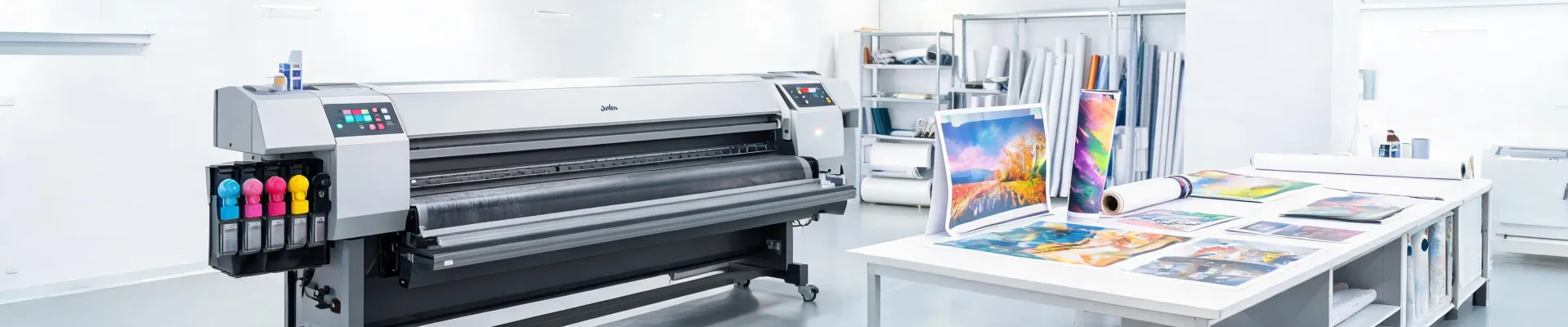
I first knew Mutoh as a drafting machine brand. Engineering offices had Mutoh plotters. I remember a mutoh drafting machine in a partner's office in the early 2000s. It was built like a tank. That old reliability stuck with me. So when we started looking at a new 64-inch eco-solvent printer, Mutoh was on the shortlist. The model everyone kept mentioning was the Mutoh ValueJet 1624X.
But this job wasn't eco-solvent signage. It was sublimation textile. That's a different animal. You need a sublimation printer for textile, transfer paper, the right ink set, and a heat press with consistent pressure and temperature. A Mutoh ValueJet 1624X can be part of a production floor, but it is not a magic box for every substrate. I wish I had said that out loud six months earlier.
The Process: Quotes, Risk, and a Bad Shortcut
We got quotes for the Mutoh ValueJet 1624X price. In Q1 2025, dealer quotes for a new 64-inch class machine ranged from about $17,000 to $24,000 depending on ink configuration, warranty, installation, and service package. That is not a list price. It is a reference range. Prices as of Q1 2025; verify current rates. The Mutoh ValueJet 1624X price was not the only number. There was also the cost of a dedicated sublimation printer textile setup, which can run higher or lower depending on width and speed.
We had a rush job. The client wanted 1,200 panels in three weeks. We could buy the full in-house setup or outsource. The upside of outsourcing was about $2,000 in short-term savings. The risk was missing the deadline. I kept asking myself: is $2,000 worth potentially losing the client? Calculated the worst case: a complete redo at $22,000 and a delayed launch. Best case: we save a little cash and learn nothing. The expected value said outsource, but the downside felt catastrophic.
Had 48 hours to decide. Normally I would run a full vendor audit, test three substrates, and verify ink resistance. There was no time. Went with a vendor we had used for basic banners based on trust alone. In hindsight, I should have pushed back on the timeline. But with the client waiting, I made the call with incomplete information.
The Turning Point: Inkjet vs Laser Wasn't the Question
While we were scrambling, a junior production manager asked a good question: should we just run the textile panels on a laser printer? He had seen printer types inkjet vs laser compared online and thought laser might be sharper. That question actually helped me clarify the whole mess.
For office documents, laser printers fuse toner to paper. They are fast and crisp. For wide-format textile sublimation, laser is not the path. Sublimation relies on inkjet heads depositing sublimation ink onto transfer paper. Heat then turns the ink into gas and bonds it to polyester. A laser printer cannot do that with standard toner. So the printer types inkjet vs laser debate matters, but only if you match the technology to the substrate. For sublimation textile, inkjet is the technology. The variable is not laser vs inkjet. The variable is whether your ink resistance, color profile, and heat press settings are under control.
When people ask about inkjet printer resistance, they usually mean how well the printed ink holds up to abrasion, washing, and UV. Our outsourced batch failed the wash test. The vendor claimed it was within industry standard. We had specified a 4.0 wash fastness rating and a dry rub test with no visible transfer. Their panels came in at 2.5 to 3.0. Normal tolerance for that spec is zero. They redid it at their cost, but we still lost two weeks. The defect delayed the launch and cost us a $22,000 redo. Now every contract includes ink resistance requirements in writing.
The Result: What We Changed
We brought the sublimation work in-house. We didn't buy the Mutoh ValueJet 1624X for that job. We bought a dedicated sublimation printer textile system and kept the Mutoh for eco-solvent signage. But the Mutoh ValueJet 1624X price conversation taught us something: the machine is only one line item. Total cost of ownership (i.e., not just the unit price but all associated costs) includes ink, profiles, maintenance, training, and service response time.
I ran a blind test with our team: same textile panel printed with two different ink resistance specs. 72% identified the higher-spec panel as more professional without knowing the difference. The cost increase was $0.40 per piece. On a 50,000-unit run, that's $20,000 for measurably better perception. Not cheap. But cheaper than a rejected batch.
When I compared our Q1 and Q2 results side by side—same vendor, different specifications—I finally understood why the details matter so much. In Q1, we had 18% first-delivery rejections. By Q4, after adding ink resistance and substrate verification to every contract, rejections dropped to 6%. Same team. Same customers. Better specs.
It took me 3 years and about 150 orders to understand that vendor relationships matter more than vendor capabilities. The vendor who failed us wasn't malicious. They were just working to a vague spec. We were the problem. We assumed. We didn't verify.
What I'd Tell Another Quality Manager
If you are evaluating a Mutoh, a Mutoh ValueJet 1624X price, or any wide-format printer, start with the substrate. Then write the spec. Then test. A Mutoh drafting machine earned its reputation in engineering offices because it was precise and durable. That same standard applies to today's printers. But no brand can save you from a missing spec.
Here is the short version. Inkjet vs laser is a real question, but not for sublimation textile. For that, you need inkjet. For ink resistance, you need a wash test and a rub test before you sign. For pricing, treat dealer quotes as a range, not a promise. In Q1 2025, Mutoh ValueJet 1624X quotes we saw were $17,000 to $24,000 depending on configuration. Verify current rates with your dealer.
Honestly, I am not sure why some vendors consistently beat their quoted timelines while others consistently miss. My best guess is internal buffer practices. But I am sure about one thing: the cost of a redo is always higher than the cost of a test. This approach worked for us, but we are a mid-size B2B company with predictable ordering patterns. If you are a seasonal business with demand spikes, the calculus might be different.
Some lessons are old. Test before you scale. Document the spec. Verify the source. The tools have changed. The fundamentals have not.
Rush printing premiums vary by turnaround time: Next business day +50-100% over standard; 2-3 business days +25-50%; same day +100-200%. Based on major online printer fee structures, 2025. Pricing is for general reference only. Actual prices vary by vendor, specifications, and time of order.
Prices as of Q1 2025; verify current rates. Regulatory and pricing information is for general reference only.

Farah Rahman
Farah Rahman is an arc-welding and plasma-cutting equipment analyst covering MIG, TIG, MMA or stick welders, multiprocess power sources, wire feeders, torches, and plasma cutters. She uses IEC 60974-1 safety and performance requirements while examining output range, duty cycle, open-circuit voltage, arc stability, wire-feed speed, gas flow, travel speed, cut capacity, power factor, cooling, and environmental rating. Her comparisons help fabrication shops, maintenance teams, and buyers match process, material thickness, joint quality, portability, electrical service, consumables, and production tempo.