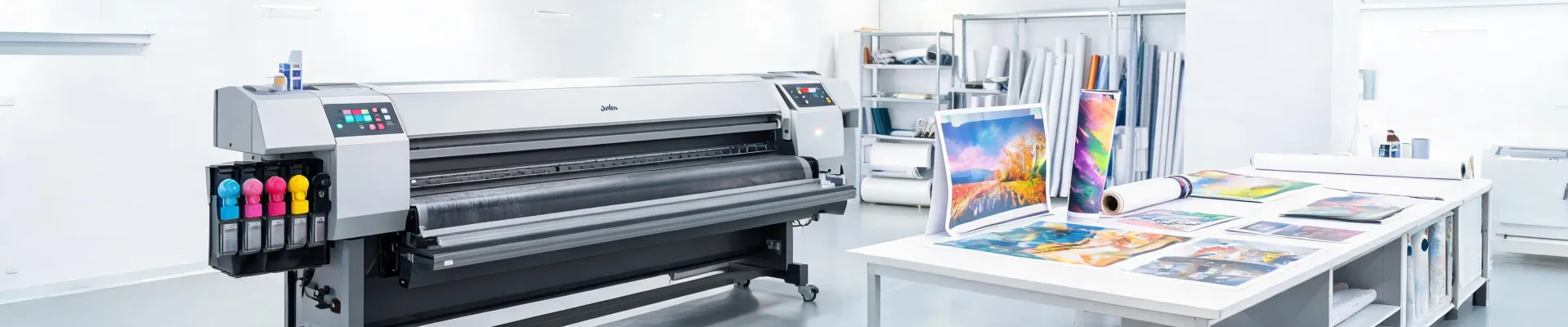
Mutoh Printer Buying FAQ: UV Printer Paper, Sublimation, DTF, and One-Pass Inkjet Questions
2026-09-21 · Elise Marceau
-
What should I verify before buying a Mutoh printer for sale?
-
Is a Mutoh sublimation printer right for apparel and soft signage?
-
What is uv printer paper, and do I need it for Mutoh UV printers?
-
What should I know about a Senortian DTF printer?
-
What is a one pass digital inkjet printer, and when does it make sense?
-
How do I avoid hidden costs on Mutoh printers and spare parts?
-
What mistakes do buyers make with industrial inkjet printers?
-
Do I need original Mutoh inks and parts?
I’m the office administrator for a 70-person commercial print shop. I manage equipment ordering and vendor relationships—roughly $180,000 annually across 12 vendors. I report to operations and finance. I’m not a print engineer. But I’ve sourced UV, DTF, and sublimation equipment since 2021, and I’ve learned where procurement teams get burned.
These are the questions I’d ask before buying any industrial inkjet system. Short answers first, details after.
What should I verify before buying a Mutoh printer for sale?
Start with three things: specs, service, spares. In that order. A Mutoh printer for sale can look identical on a quote sheet, but the support path changes everything. Ask who performs installation, what response time is promised, and whether dampers, heads, caps, and capping stations are stocked locally. I’m not a technician, so I can’t speak to every technical failure mode. What I can tell you from procurement is this: if the dealer can’t show you a parts list and a named service contact, the lowest sticker price is not the lowest total cost.
Per FTC business guidance (ftc.gov), vendors should be able to substantiate performance claims; make them put uptime and support terms in writing.
That means asking for the service-level agreement, not just a brochure. If the answer is vague, budget for downtime.
Is a Mutoh sublimation printer right for apparel and soft signage?
If your work is polyester-rich apparel, flags, or soft signage, a Mutoh sublimation printer is often a practical fit. It’s not a do-everything machine. Transfer paper quality, ink profile, and heat-press consistency matter as much as the printer brand. We run a Mutoh sublimation printer for rollout banners and teamwear; the mistakes came from paper and press settings, not the printer.
My experience is based on about 14 wide-format and garment units in our shop. If you’re mostly cotton or high-mix DTG, your experience might differ. Ask for sample output on your actual fabric before you commit. That one step has saved us from at least two bad purchases.
What is uv printer paper, and do I need it for Mutoh UV printers?
UV printer paper usually refers to media or transfer film designed for UV-curable ink systems. Some UV workflows print directly to rigid substrates; others use UV DTF or transfer paper for curved or irregular items. You don’t automatically need it just because you buy a Mutoh UV flatbed. You need it if your job mix includes items that can’t go on the bed.
Check ink adhesion, stretch, and laminate compatibility with the dealer. I once assumed all UV paper was interchangeable. It wasn’t. We wasted about $600 in media and test time. Now I require a written media and ink compatibility sheet before any production run. If the vendor won’t provide one, that tells you something.
What should I know about a Senortian DTF printer?
If you’re comparing a Senortian DTF printer with other DTF units, treat it like any production asset: who services it, what firmware updates look like, and how easy it is to source film, powder, and ink. I don’t have hands-on experience with every Senortian DTF printer model, so I can’t speak to its specific reliability.
From a purchasing perspective, DTF support is the bottleneck. Ask for your dealer’s customer list—not a reference sheet with logos—and call two shops that have run the same model for at least six months. Ask about clogging, powder mess, and how often they replace printheads. The answers matter more than the demo.
What is a one pass digital inkjet printer, and when does it make sense?
A one pass digital inkjet printer prints in a single pass over the media instead of scanning back and forth. It can be fast for repetitive work like labels, packaging, or corrugated pieces. It only makes sense if your volume is high enough to keep it fed.
For a shop our size, a one pass digital inkjet printer would sit idle. That’s the honest math. If you run thousands of identical pieces per shift, get a total cost model: ink, printhead lifespan, service contract, substrate waste, and operator training. Speed is only valuable if the work is repeatable. If every job is different, you’re paying for capacity you can’t use.
How do I avoid hidden costs on Mutoh printers and spare parts?
Budget for the boring stuff. Dampers, wipers, caps, filters, capping stations, and ink waste are not optional. I learned that the hard way. Saved $300 on a non-OEM damper kit once. It failed during a rush week, and we lost a $2,400 job plus overtime.
I won’t tell you third-party inks are always safe—I don’t know that, and neither does generic marketing. For a Mutoh printer for sale, request a 12-month consumables and spare-parts estimate in writing. Then compare that number, not just the machine price. The finance team will ask. You should have the answer before they do.
What mistakes do buyers make with industrial inkjet printers?
The classic rookie mistake is assuming wide format or DTF means the same thing to every vendor. It doesn’t. Another mistake: buying on print speed alone. Uptime, service response, and operator training usually decide whether the machine pays for itself.
If I remember correctly, our first UV printer took nearly six weeks to become productive because we under-trained the team. Not the printer’s fault. Ours. I should add that workflow software and color management matter as much as hardware. A machine is only as efficient as the process around it. Efficiency is the real competitive advantage—not the spec sheet.
Do I need original Mutoh inks and parts?
For warranty and consistent output, original consumables are the safe default. Some shops run approved alternatives successfully. I can’t guarantee that for your setup. This gets into ink chemistry and printhead territory, which isn’t my expertise. Consult your dealer or a trained technician before switching.
What I can tell you: document every change, keep separate profiles, and track failure rates. Efficiency comes from reducing variables, not chasing the lowest-cost bottle. That’s the procurement view. It’s also the view that keeps your finance team from asking why the printer is down again.

Elise Marceau
Elise Marceau is an LED display and digital-signage systems analyst covering LED video walls, modular screens, transparent LED, control processors, and indoor or outdoor signage. She applies IEC 62368-1 safety principles while comparing pixel pitch, luminance, contrast, refresh rate, colour uniformity, viewing angle, ingress protection, power density, module serviceability, and signal redundancy. Her specification guides help integrators, venue operators, retailers, and procurement teams align viewing distance, ambient light, content format, installation access, electrical load, and lifecycle support.