Why a $99 Inkjet Printer Can Cost More Than a Mutoh: TCO Lessons from a Procurement Manager
2026-08-26 · Elise Marceau
"What did that printer cost?" That's the wrong question. I've been managing procurement for a 45-person print shop for the last seven years. I've negotiated with over 40 vendors and tracked every dollar on a $620,000 annual supply budget. And I can tell you this: the price tag on a printer is the least important number in the room.
The only number that matters is the total cost of ownership — the TCO. Let me show you what I mean.
The $99 Desk Printer That Isn't $99
Take the Brother MFC-J1010DW inkjet all-in-one printer. It's a common office workhorse. If you catch a sale, it can be yours for around $99 or $149. The box says print, scan, copy. Sounds like a steal.
Then you buy ink. The standard cartridges are small. One replacement set runs maybe $50 and prints around 600 pages. An office printing 3,000 pages a month goes through that every few days. That's $250 a month in consumables—$3,000 a year. In the first year, the ink alone costs thirty times the purchase price. Let that sink in. A $99 printer with a $3,000 annual fuel bill isn't a bargain; it's a subscription wearing a printer costume.
Is the Brother MFC-J1010DW a bad printer? No. It's a fine machine for light use. But if you put it in a busy environment without calculating the consumables, it becomes a budget killer. I see this pattern in almost every office that buys an all-in-one for shared use—they end up spending double on ink within a quarter.
What a Mutoh Sublimation Printer Taught Me
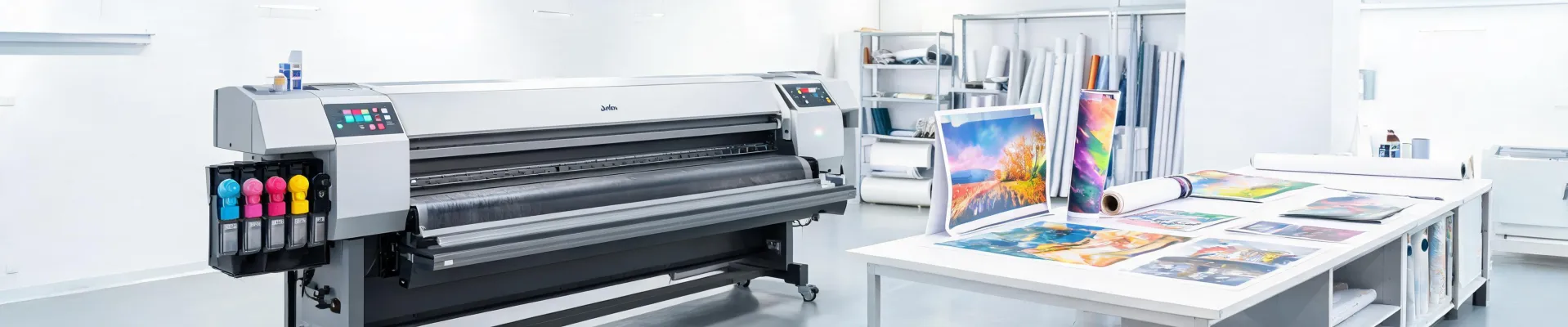
For our textile printing line, we evaluated a Mutoh sublimation printer against two competing systems. Mutoh's machine was not the cheapest quote. The numbers pointed to another brand—about 11% cheaper with similar specs. But something felt off. That other vendor's delivery timeline was "flexible." In my experience, flexible delivery on day one becomes unreliable delivery on week five.
I went with my gut and chose Mutoh. I almost second-guessed myself when the finance team asked about the price gap. Then, in Q2 2024, a Mutoh printer damper failed on our production machine. For anyone who hasn't bought a printer damper before—it's a small part, but without it, a six-figure printer sits dead. We ordered a genuine Mutoh damper, and it arrived overnight. The technician swapped it in 20 minutes. The cost: $140 for the part and $350 labor. Total downtime: about a day.
Meanwhile, a colleague who had bought the "cheaper" machine was waiting two weeks for a spare part from overseas. His machine wasn't dead, but it was crippled—one color band down, jobs deferred. That week, the true cost of their 11% savings became clear. The surprise wasn't the price difference. It was how much the reliability of a $140 part was worth.
Factory Direct and Wholesale Inkjet Printer Deals: The Fine Print
I've also looked at sourcing from a dtf printer factory or buying wholesale inkjet printers for resale. The factory-direct price per unit can be tempting. I remember evaluating a DTF printer factory that quoted 20% below our current supplier. On paper, it was a no-brainer.
Then we read the fine print. The quote didn't include shipping insurance, installation, or operator training. The warranty required the machine to be returned to the factory—cross-border freight. There was no local stock of printheads, dampers, or even maintenance fluid. Every breakdown meant a border crossing and at least a week of downtime. When I calculated the TCO over three years, including a realistic failure rate and lost production time, the "cheap" factory option was 18% more expensive than our current supplier.
Also, beware of flashy green claims. Per the FTC's Green Guides, if an ink or printer is marketed as "eco-friendly" or "recyclable," those claims need to be substantiated. If a supplier can't show you the evidence, that's a red flag—just like a warranty with escape hatches.
Four Hidden Costs I Always Check
In my notes, TCO includes the base price, setup fees, shipping and handling, consumables, downtime risk, and the cost of reprints when quality fails. The hidden ones are almost always the last two. Four items go on every checklist:
- Consumables: cost per page, ink yield, and whether high-capacity cartridges or bulk ink systems exist.
- Parts and service: availability of dampers, printheads, rollers; do you need to ship back to the manufacturer?
- Downtime: what's the average repair time? Is a technician local?
- Warranty fine print: what does it exclude—labor, installation, consumables?
Every one of these can turn a "cheap" quote into an expensive one. That's not speculation; it's what I've seen in our own cost tracking system and from comparing notes with other procurement managers.
But Is TCO Overkill for Small Purchases?
"TCO is great for big machines, but overkill for a $99 printer," you might say. It's not. The principle scales down. A few extra dollars for a high-yield cartridge on an office printer saves hundreds over a year. A compatible damper that costs half the price of a genuine Mutoh part might work fine—or it might fail in two months, costing you the part, the labor, and the downtime. I'm not an engineer, so I won't tell you how to spec a printhead. What I can tell you from a procurement perspective is that the cheap path often has a toll booth.
The other objection I hear is: "I don't have time to research TCO for every purchase." I understand. But I've built a simple cost calculator in a spreadsheet, and it takes ten minutes to input a quote, estimated consumables, service intervals, and downtime risk. Ten minutes of work to avoid a $1,200 redo. That feels like a good trade.
The Real Cost Is What You Can't See on the Tag
So here's where I land: stop falling in love with the sticker price. Whether you're buying a Brother MFC-J1010DW for the front office, a Mutoh sublimation printer for production, or considering a dtf printer factory's quote, ask about the parts availability, the consumables cost, the support structure, and the hidden fees. Then decide.
When we started applying TCO thinking to every printer purchase, we cut our equipment expenses by 17% last year. Not by buying cheaper machines—by buying machines that cost less to own. There's a quiet satisfaction in watching the numbers match your expectations instead of finding surprises at the end of the quarter.
Next time a salesperson says "this is the lowest price we can offer," smile and ask, "Now tell me about the total cost." The conversation changes fast.

Elise Marceau
Elise Marceau is an LED display and digital-signage systems analyst covering LED video walls, modular screens, transparent LED, control processors, and indoor or outdoor signage. She applies IEC 62368-1 safety principles while comparing pixel pitch, luminance, contrast, refresh rate, colour uniformity, viewing angle, ingress protection, power density, module serviceability, and signal redundancy. Her specification guides help integrators, venue operators, retailers, and procurement teams align viewing distance, ambient light, content format, installation access, electrical load, and lifecycle support.