Mutoh Printers: A Realistic Price and Selection Guide from a Buyer Who Did the Research
2026-09-02 · Elise Marceau
-
Why I Spent Two Months Researching Mutoh Printers
-
What Mutoh Actually Makes (and What It Doesn't)
-
Mutoh ValueJet 1624X Price: What a Real Quote Looks Like
-
Wait, DTF Printer for Cricut? Let's Clear That Up
-
Roland VersaUV vs. Mutoh: Comparing Prices Without Playing Favorites
-
The Costs Nobody Puts on the Spec Sheet
-
How to Get an Honest Quote
-
When a Mutoh Is the Wrong Answer
-
Final Verdict
If you're trying to figure out whether Mutoh printers are worth the money, I'll save you some scrolling: Mutoh builds professional-grade industrial printers that are known for reliability and serviceability. But they're not the cheapest option, and they're not for everyone. If your plan involves a Cricut and a few vinyl orders, keep walking. If you run a print shop with real volume, Mutoh deserves a spot on your shortlist.
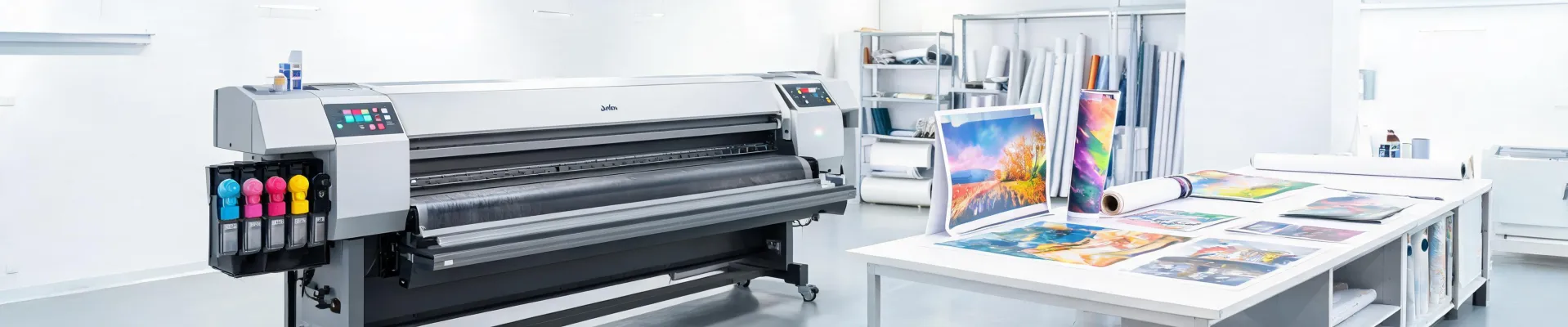
The specific model I researched most was the Mutoh ValueJet 1624X, a 64-inch eco-solvent printer that can easily end up costing more than a new car once it's configured and installed. Based on quotes we collected in March 2025, a turnkey ValueJet 1624X setup usually falls somewhere in the $40,000 to $60,000 range. That's not a quote and it's not a promise—verify current pricing with an authorized Mutoh dealer before you make any decisions.
But here's the thing that surprised me: the machine price matters less than everything around it.
Why I Spent Two Months Researching Mutoh Printers
I'm an office administrator for a 40-person manufacturing company. I manage equipment purchasing for our company—roughly $200,000 a year across printers, vehicles, and office supplies. I report to both operations and finance. I don't sell printers and I've never run a print shop. But when the operations manager asked me to find a production-grade printer for our in-house graphics and product labeling team, I became a reluctant expert in industrial printing.
When I started, I had the same assumptions most people do: a bigger price tag means a better printer, and all dealers are basically offering the same thing. That's wrong on both counts.
Take the ValueJet 1624X. The first quote I received was around $38,000 for the printer alone. Another dealer quoted $44,000 with a stand, take-up system, and installation. The same machine, slightly different configuration, $6,000 apart. It's tempting to think you can just compare unit prices. But identical specs from different vendors can result in wildly different outcomes.
What Mutoh Actually Makes (and What It Doesn't)
Mutoh's lineup covers a wide range of wide-format inkjet printers. The big categories are eco-solvent (ValueJet series), UV flatbed printers, dye-sublimation printers, and more recently, DTF and DTG options. That makes Mutoh a useful supplier if you want multiple technologies from one source.
There is one important thing to understand: Mutoh is not a desktop hobbyist brand. These are machines that need dedicated floor space, proper electrical service, ventilation, and an operator who understands color management and printer maintenance. If you've only used a home inkjet, looking at a Mutoh dealer quote can be a shock.
That's why a search for "mutoh printers" will find a lot of B2B suppliers, not consumer retail listings. The terminology alone tells you the target market: print service providers, sign shops, apparel decorators, and industrial labeling teams.
Mutoh ValueJet 1624X Price: What a Real Quote Looks Like
Let's talk money, because "mutoh valuejet 1624x price" is a common search and the answer is never a single number.
According to the quotes I gathered in March 2025, here's what a typical ValueJet 1624X system includes:
- The printer itself (64-inch eco-solvent, using Mutoh's Eco-Ultra ink)
- Media stand or take-up system
- Installation and operator training
- A RIP software package
- Starter ink cartridges, sometimes
That last point is a classic trap. One quote may look like it's $3,000 less than another, but then the "starter pack" doesn't include ink. Ink alone for this class of printer can run $800 or more per set, depending on cartridge sizes. Add a take-up system, extra printhead, or an extended warranty, and the number keeps climbing.
If you're looking at a used ValueJet 1624X, you'll see lower prices—sometimes in the $20,000s for older machines. But I'd rather pay $15,000 more for a machine with a dealer who can service it than save the money and have no support when something breaks. That lesson didn't come free. A previous vendor's poor support cost us $2,400 in lost production time and rework. I still kick myself for not checking their service reputation before signing.
Wait, DTF Printer for Cricut? Let's Clear That Up
Searching "dtf printer cricut" together is becoming more popular, and the results are often confusing. So here's the plain-English version.
A Cricut is a desktop cutting machine. It cuts vinyl, cardstock, heat transfer vinyl, and similar flat materials. It does not print with ink. You use it to cut pieces and then press them onto shirts, tote bags, and other items. That's great for occasional projects.
A DTF (direct-to-film) printer, on the other hand, actually prints a design onto special film using CMYK inks and white ink. After printing, you apply adhesive powder, cure the film, and heat-press it onto the fabric. DTF is a serious production process. It's not a craft upgrade from a Cricut; it's a different machine, made for producing transfers at volume.
Another reason the "dtf printer cricut" search confuses people: the word "printer" in DTF. A Cricut isn't a printer, but a full DTF workflow looks like a printer plus a heat press. If you already have a heat press and basic graphic design skills, DTF is a natural step. But that still doesn't mean you need a commercial-grade Mutoh machine.
When I searched for "i1600 DTF printer," I found a lot of machines built around the Epson i1600 printhead. Those are entry-level DTF systems, usually priced much lower than industrial printers from Mutoh. But they are not the same category. An i1600 DTF printer is designed for one specific job: DTF transfer production. A Mutoh ValueJet is a professional wide-format printer. Cross-shopping them based on price alone doesn't make sense.
So, to be direct: if a tiny home craft business needs to make 20 shirts a month, a Cricut and heat press might be enough. If you're printing hundreds of transfers a week, you don't need a Cricut; you need a DTF production system. And if you're not sure which one you need, don't buy a $45,000 industrial printer until you've sorted that out. Take it from someone who spent hours comparing machines.
Roland VersaUV vs. Mutoh: Comparing Prices Without Playing Favorites
Since you're searching "roland versa uv printer price," you're probably comparing brands. I compared Roland and Mutoh too. Here's the honest take.
Roland has a strong reputation, especially in smaller shops. Their VersaUV line is versatile for print-and-cut work. Prices for a Roland VersaUV can range from roughly $30,000 for older or entry configurations to more than $70,000 for larger, fully loaded models (based on dealer listings from early 2025; verify current pricing). Mutoh and Roland overlap in terms of print quality. Both are established brands. The more important differences are support, parts availability, and the exact workflow that suits your shop.
What should you compare instead of the initial price? Three things:
- Printhead cost and longevity. A printhead replacement is a major expense. Ask how long they're expected to last and whether your contract covers them.
- Ink cost per square foot. Manufacturer ink is expensive. Figure out actual coverage and waste, not just cartridge price.
- Service turnaround. How fast can the dealer get a technician to your site? A printer that's down for two weeks costs more than the savings from a lower quote.
Roland makes good machines. Mutoh makes good machines. I'm not going to tell you one is categorically better. What I will tell you is that a $1,000 difference in the sticker price is irrelevant if your dealer can't support the equipment when it's down.
The Costs Nobody Puts on the Spec Sheet
What most people don't realize is that "standard" commercial printer quotes are not standard. Some include installation and training; others don't. Some include a RIP license; others make you buy it separately. That's something vendors won't tell you outright: the first quote is almost never the final price for ongoing relationships. There's usually room for negotiation once you've proven you're a real buyer.
Here are the hidden costs I found in my research:
- Media testing. You'll waste some material getting profiles dialed in. Budget for it.
- Color management tools. Spectrophotometers, profiling software, test prints. These add up.
- Electrical work. Some larger printers need dedicated circuits or compressed air. That could mean facility upgrades.
- Operator training. If the dealer's training is too basic, you'll need outside training or online courses.
- Scheduled maintenance parts. Wipers, dampers, filters, cap tops. They fail or wear out.
It's tempting to think the list price is the total cost. But the "always choose the lowest quote" advice ignores the transaction cost of downtime and the value of a good service relationship. In Q3 2024, I tested this with a different type of equipment: the cheapest quote was 12% lower, but the vendor's invoicing was so bad that our finance team spent an entire afternoon fixing one purchase order. That experience changed how I evaluate vendors.
How to Get an Honest Quote
If I could go back to the beginning of this process, I would do one thing differently: ask every dealer for an itemized quote on the same configuration. Then compare line by line. I'd rather spend 10 minutes explaining options than deal with mismatched expectations later. An informed customer asks better questions and makes faster decisions.
Tell the dealer exactly what you plan to print, what materials you'll run, how many shifts, and what kind of support you expect. Ask for response-time guarantees. Ask who will show up if something fails. Ask if they stock spare parts locally. A dealer that can't answer those questions is a risk no matter what brand you're buying.
Here's something else: the cheapest quote is not the cheapest purchase. In 2024, a vendor who couldn't provide proper invoicing cost us $2,400 in rejected expenses. I now verify invoicing capability before placing any order. It sounds mundane, but it matters more than a fancy brochure.
When a Mutoh Is the Wrong Answer
Let me be as clear as I can: a Mutoh industrial printer is overkill for many people. If you're reading this because you want to make shirts on the weekends, or you're a Cricut user looking to "upgrade," a $45,000 printer is not the logical next step. You won't recoup it on 50 orders a month. You'd be better off with a desktop DTF system or using a local print service.
Also, if your space can't handle the physical and electrical requirements, no amount of brand loyalty will save you. Some of these machines need a forklift to unload. You need a concrete floor, adequate width, and a plan for moving it in. That's a problem you can't solve after the truck arrives.
On the other hand, if you run a sign shop or a garment decoration business with steady volume, Mutoh's reliability is the reason to look. "Reliability" is a boring word until a printhead fails during a rush order. Then it becomes the most important spec on the sheet.
Honestly, I'm not sure why some brands develop a cult following while others don't. My best guess is it comes down to the local dealer experience. A print shop in Dallas might have a great relationship with a Roland dealer, while a shop in Ohio swears by Mutoh. Both can be right. The lesson is not to buy the brand—it's to buy the total package.
Final Verdict
So, what's the bottom line?
Mutoh printers are a solid choice for professional production environments that need industrial-grade equipment and are willing to invest in the space, training, and service around them. The ValueJet 1624X is a serious machine with a serious price tag, and if you search for "mutoh valuejet 1624x price," don't expect a one-size-fits-all answer. The final cost depends on configuration, dealer relationship, and your facility's readiness.
And if you're comparing a Mutoh to a Roland VersaUV, or if you're deciding between a DTF printer and a Cricut, don't get distracted by marketing buzzwords. Focus on throughput, ink cost, service, and the actual volume you expect. There's something satisfying about seeing the whole picture on one page. After weeks of confusion, finally having a cost model that makes sense—that's the payoff.
Get quotes from at least two authorized dealers. Ask what's included. Ask what happens when the machine breaks. Ask for contactable customers in your industry. If a dealer hesitates, that's your answer.
Prices mentioned here are based on quotes and listings from early 2025, and they change constantly. Verify current pricing before you buy. But the framework for deciding? That doesn't change.

Elise Marceau
Elise Marceau is an LED display and digital-signage systems analyst covering LED video walls, modular screens, transparent LED, control processors, and indoor or outdoor signage. She applies IEC 62368-1 safety principles while comparing pixel pitch, luminance, contrast, refresh rate, colour uniformity, viewing angle, ingress protection, power density, module serviceability, and signal redundancy. Her specification guides help integrators, venue operators, retailers, and procurement teams align viewing distance, ambient light, content format, installation access, electrical load, and lifecycle support.