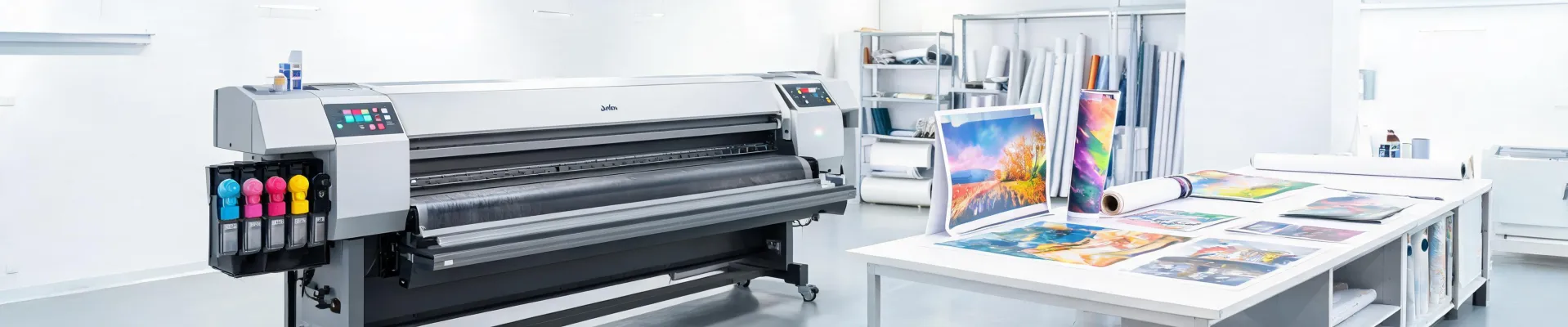
The Real Cost of a Mutoh Printer Cutter Isn’t the Price Tag—It’s the Costs Nobody Quotes
2026-09-02 · Elise Marceau
If you search for “eufy kickstarter uv printer,” you’re probably trying to find a cheap flatbed that can print on pens, phone cases, and nameplates. I get the appeal. A crowdfunded UV printer at a consumer price sounds like a game-changer. But after managing the printing budget at a 40-person sign shop for six years, I can tell you the machine price is the least important number in the room. The real cost shows up later, in printheads, ink, maintenance, and the reprints you don’t plan for.
This isn’t a sales pitch. I’m a procurement manager, not a printer salesperson. I’ve signed off on about $180,000 in printing and consumables spending every year since 2019. I keep a spreadsheet of every invoice, every service call, every “small” part that turned out to be a big line item. I’ve compared quotes for wide-format printers, UV flatbeds, and inkjet refillable systems more times than I can count. So when I say “Mutoh printer cutter” is a bigger workflow asset than most people realize, I’m looking at it through the lens of cost per usable square meter, not sticker price.
Here’s the problem: most buyers never get to that lens.
The Surface Problem: You Think You’re Comparing Prices
Go to any forum and search “printer UV flatbed,” and you’ll see the same question: “Should I buy the cheap UV flatbed?” Or “Is the Mutoh printer cutter worth it versus a separate vinyl cutter?” Or “Is an inkjet refillable printer the answer to high ink costs?”
These are all reasonable questions. They’re also the wrong first question.
The first question should be: “What is the five-year cost of owning this machine in my shop, at my volume, with my operators?”
I made that mistake in my first year. I compared the purchase prices of two eco-solvent printers. One was a known workhorse—a Mutoh, as it happened. The other was another brand that was $3,000 cheaper. The spec sheets looked similar. Print resolution, speed, ink delivery, all close. I was about to recommend the cheaper one until a service tech told me to check the printhead replacement cost. That’s when I learned that a printer is not a one-time purchase. It’s a series of maintenance bills held together by a metal frame.
What I mean is: the machine is the beginning, not the cost.
The Deep Cause: You’re Buying a Machine Without an Ink Strategy
Here is the part of the cost that rarely makes it into the brochure.
Printheads Are the Billing Meter
Every inkjet printer, whether it’s a Mutoh printer cutter, a UV flatbed, or a desktop “inkjet refillable printer,” has a hidden billing meter: the printhead.
Printheads wear. They clog. They fail if you use the wrong ink or let a machine sit. And they are not cheap. On a wide-format printer, a single printhead can be $300 to $800. On a UV flatbed, you might have four, eight, or more. Multiply that by the expected life of the machine, and you are not buying one printhead—you’re buying a decade of printhead replacements.
That’s why I now ask every vendor three questions before I ask the price:
- What is the printhead cost and expected life at my monthly print volume?
- Does the warranty cover nozzle failures caused by ink, or only manufacturing defects?
- What is the daily maintenance routine that prevents printhead death?
The vendor who answers all three without vague language is a vendor I trust. The vendor who says “don’t worry about it” gets a red flag.
In our shop, the generic replacement damper story is the classic penny-wise, pound-foolish example. We saved $50 on a generic damper for our printer cutter instead of the OEM part. Six weeks later, it leaked ink across the carriage. That $50 saving turned into $350 in labor, a service call, and a day of lost production. The plan was to save money. The result was the opposite.
Refillable Ink Is a Tool, Not a Magic Bullet
“Inkjet refillable printer” has become a magic phrase. People imagine a tankful of ink that lasts for years. I understand why. OEM ink on some machines costs more per liter than fine wine.
But refillable is only a description of the ink delivery system. It says nothing about ink quality, printhead compatibility, color gamut, or maintenance intervals. The wrong aftermarket ink can reduce printhead life, change color output, and void a warranty. So when I see a buyer choose a printer only because “you can refill it for pennies,” I try to remind them of the old rule: the cheapest ink is the one that doesn’t force you to buy a printhead.
There’s another thing people miss. Refillable bulk ink systems need monthly circulation, cleaning, and flushing. If your operator doesn’t do those steps, the ink settles, the nozzles clog, and the service queue grows. The ink was cheap; the labor was not.
Color Failures Are More Expensive Than Parts
Sometimes the cost isn’t in the machine at all. It’s in the job that leaves the shop and comes back.
We print a lot of branded packaging prototypes and retail displays. If a corporate blue is off, the customer doesn’t say “close enough.” They say “reprint it.” That’s not just media and ink. It’s setup, operator time, press downtime, and shipping two ways.
Industry standard color tolerance is Delta E < 2 for brand-critical colors. Delta E of 2–4 is noticeable to trained observers; above 4 is visible to most people. Reference: Pantone Color Matching System guidelines.
When a printer can’t hold color within that tolerance, every job is a gamble. And if you’re running a UV flatbed without a spectrophotometer and a proper color profile, you’re gambling on every single batch.
That’s why the “specs” of a printer matter, but not the way you think. Resolution is part of it. The Mutoh printer cutter will happily print at 300 DPI for commercial work; large format from viewing distance can get away with 150 DPI. But color consistency is a product of printheads, ink, profiles, and calibration—not pixels per inch. A cheap printer with high DPI is still a cheap printer if it can’t repeat a color across the day.
The Real Cost of Getting This Wrong
Let’s talk about what happens when you optimize the wrong number.
I almost did this two years ago. We were in the market for a UV flatbed. Every cost spreadsheet pointed to a lower-priced machine. On paper, it was a no-brainer: similar print area, similar print speed, and a price that was 22% lower. I had a strong gut feeling that something was off. The vendor took two days to answer basic questions. Their sample prints had inconsistent colors. Still, the numbers were tempting.
My gut won. We chose the more established machine, a Mutoh UV flatbed, and paid more upfront. I’ll be honest: I wasn’t completely sure we’d made the right call for the first three months. Then I checked the forums for the other machine. Users were struggling with printhead failures, missing firmware updates, and service delays. Some owners waited weeks for parts.
That’s the moment I added a rule to our procurement policy: quote the total cost of ownership, not the price of the tool.
(Should mention: the cheaper machine wasn’t universally bad. Some owners have made it work. But my shop doesn’t have the luxury of a dedicated repair technician who can tear down a flatbed on a Tuesday afternoon. I need a machine that a local tech can fix and a supplier who actually answers.)
Getting this wrong has a compounding effect. A $1,200 repair isn’t just $1,200. It’s the revenue you didn’t earn while the machine sat idle. It’s the overtime when you catch up. It’s the customer who quietly moves to another shop because your turnaround got slower. I’ve tracked enough orders to see the pattern.
In my old job, I once approved a service contract without reading the exclusions. That was a rookie mistake. I learned to ask, “What is not covered?” before asking “What does it cost?” The same lesson applies to printing equipment.
Give me a vendor who lists all fees upfront—even when the total looks higher—and I’ll trust them more than one who says “the price is the price” and then adds freight, environmental fees, and an installation charge later. At least, that’s been my experience with production shops that run high volume.
What To Do Instead: The Short, Unsexy Answer
You can keep the whole process simple without being a procurement expert. Here’s the checklist I use now:
- Put the printhead replacement cost into your calculator. Research the expected life, then divide the total machine cost by the number of billable prints, not the other way around.
- Ask for the full list of included services in writing: installation, training, color setup, spare parts, and warranty exclusions. If the vendor says “all included,” ask them to show you what “all” means.
- Run your own test file, not their demo file. Print it on your intended substrate, measure the color, and let it sit for a week to check for fading or adhesion issues.
- Buy from a company that has been selling industrial printing equipment for decades, not a brand you’ll have to track down through a Kickstarter update page. The Mutoh drafting machine of the 1980s had to earn trust the hard way—on blueprints, where a line that didn’t repeat meant a rejected job. That precision DNA carried into wide-format printers. They have parts availability and technical support because industrial printers are the entire business, not a side project.
- Include the operator in the decision. The most cost-effective machine is the one your team can operate without fear.
There is something satisfying about getting this right. When the monthly cost report comes in and the ink, service, and labor numbers line up with the forecast, I feel like we finally own the process instead of serving the machine. No 3 a.m. nervousness about whether a service call will blow the monthly budget. Just clean numbers and a production floor that runs because somebody asked the right questions first.
Bottom line: before you compare prices, compare costs. Ask what’s not included. Ask about printheads. Ask about color repeats. Ask about repair times. Then decide if the extra upfront money is actually extra.
If you’re shopping for an “eufy kickstarter uv printer” or a cheap inkjet refillable printer, I’d still talk to you. I’d just ask you to bring a notepad. Because the machine is the visible part. The costs are the invisible part. And the invisible part is where budgets go to die.

Elise Marceau
Elise Marceau is an LED display and digital-signage systems analyst covering LED video walls, modular screens, transparent LED, control processors, and indoor or outdoor signage. She applies IEC 62368-1 safety principles while comparing pixel pitch, luminance, contrast, refresh rate, colour uniformity, viewing angle, ingress protection, power density, module serviceability, and signal redundancy. Her specification guides help integrators, venue operators, retailers, and procurement teams align viewing distance, ambient light, content format, installation access, electrical load, and lifecycle support.