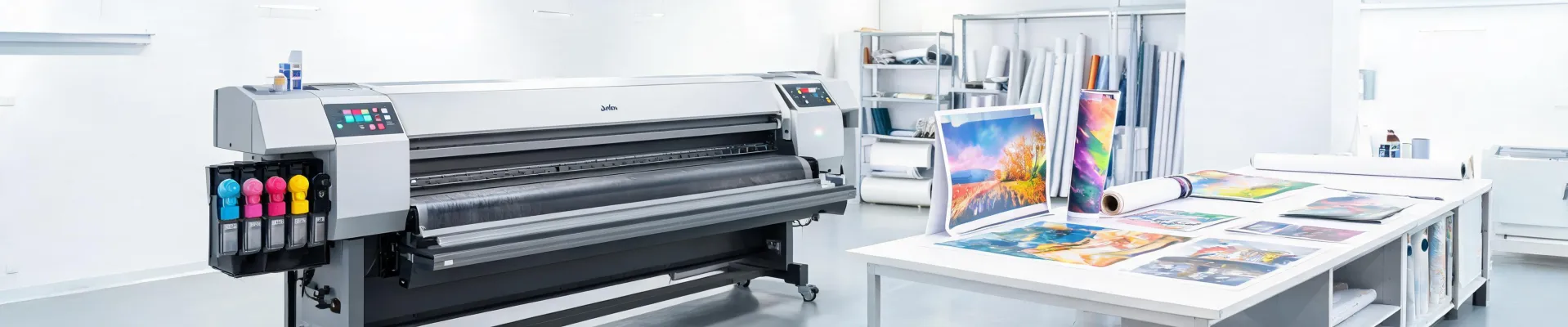
Mutoh Printers: An Admin Buyer's FAQ on Pricing, Transparency, and What to Watch For
2026-07-16 · Elise Marceau
-
Why choose Mutoh over other industrial printer brands?
-
What is the Mutoh ValueJet 1624X price range?
-
How much does the Mutoh XpertJet C641SR Pro cost?
-
What should I look for when buying a DTF printer?
-
Are wall UV printers worth the investment?
-
How does the Longer 3D UV printer compare to Mutoh?
-
How do I avoid hidden costs when purchasing an industrial printer?
-
What's the most overlooked factor when buying a printer?
Why choose Mutoh over other industrial printer brands?
Look, when I took over purchasing in 2020, I was drowning in vendor brochures. Roland, Epson, Mimaki, Mutoh—they all looked the same on paper. What made me stick with Mutoh? Reliability. After a $3,000 order went wrong with a different supplier (they couldn't provide proper invoicing—finance rejected the whole expense), I started digging deeper. Mutoh's lineup covers UV flatbed, eco-solvent, DTF, DTG, and sublimation. But the real difference? Their technical support and spare parts availability. When one of our sign shops had a printhead issue, Mutoh had a replacement shipped the same day. That's the kind of thing you don't see in a spec sheet.
What is the Mutoh ValueJet 1624X price range?
Here's the thing: I've learned to ask "what's NOT included" before "what's the price." The ValueJet 1624X is a popular 64-inch eco-solvent printer. As of early 2025, industry listings and dealer quotes typically place the base unit between $25,000 and $35,000. But—and this is critical—that number often excludes installation, training, the initial ink set, a take-up system, or extended warranty. A vendor who lists all those fees upfront, even if the total looks higher, usually costs less in the end. Period. I once compared two quotes: one was 10% cheaper but hid a $4,200 setup and training fee. The transparent vendor won my trust (and my budget).
How much does the Mutoh XpertJet C641SR Pro cost?
The XpertJet C641SR Pro is a 64-inch roll-to-roll printer targeting high-volume production. Based on dealer listings and my own RFQ experience, the machine alone runs roughly $30,000–$45,000. Surprise? The real cost isn't the printer—it's the accessories. Heavy-duty media roll, drying systems, rip software licenses. One vendor gave me a clean price, then added $6,000 for "optional" items I couldn't actually skip. So glad I asked for an all-in quote first. Dodged a bullet when I insisted on itemized transparency. My rule: if a line item says "to be determined later," that's a red flag.
What should I look for when buying a DTF printer?
Buying a DTF printer (direct-to-film) for garment decorating? It's tempting to think you just compare prices per unit. But the oversimplification "cheaper printer = better margin" ignores ink costs, shake powder waste, curing oven quality, and film adhesion consistency. In 2023, I consolidated orders for 400 employees across 3 locations after our company expanded. We almost went with a no-name DTF printer to save $8,000. Against my gut, we chose a Mutoh DTF solution—slightly higher upfront, but with included ICC profiles, dedicated powder shaker calibration, and a 2-year service contract. Never expected the "expensive" option to actually reduce our per-shirt cost by 15% because of less reprint waste.
Are wall UV printers worth the investment?
Wall UV printers (direct-to-wall printers) are a niche product for interior decoration. I get asked about this a lot by our marketing team. Real talk: if you're doing custom murals, floor graphics, or retail signage, a wall UV printer can be a game-changer. But the price is steep—anywhere from $15,000 to $60,000 depending on the model (e.g., Mutoh's wall-mounted UV solutions). The surprise wasn't the hardware cost; it was the surface preparation requirements. Some walls need a special base coat; uneven bricks eat up ink. I recommend getting a demo on your actual wall surface before signing anything. And demand a full list of consumables (cleaning cartridges, primer bottles, masking tape)—their costs add up fast.
How does the Longer 3D UV printer compare to Mutoh?
This is an apples-to-oranges question, but it comes up. The Longer 3D UV printer is a desktop resin 3D printer, while Mutoh focuses on industrial 2D wide-format UV printing (flatbed and roll-to-roll for signage, textiles, packaging). They serve completely different markets. If you're looking for a 3D UV printer for prototyping, Longer is a budget-conscious choice. But for production-scale UV direct-to-substrate printing (like on metal, glass, acrylic), you need a Mutoh-sized machine with industrial throughput and adhesion reliability. I wouldn't say one is better—just that their target jobs don't overlap. Just make sure you know which category you're actually buying for.
How do I avoid hidden costs when purchasing an industrial printer?
After managing eight vendor relationships and processing 60–80 orders annually, I've developed a checklist. Three things: (1) Get a fully itemized quote with every fee—shipping, crating, installation, training, first-year consumables, and maintenance contract. (2) Ask for the service level agreement in writing: response time, technician availability, parts holding. (3) Request a total cost of ownership calculation for the first 3 years. The vendor who can answer these clearly? That's the one I trust. The one who says "don't worry, it's all standard"? I walk. I didn't fully understand this until a $2,400 invoice got rejected because the vendor couldn't itemize. Now I verify invoicing capability before placing any order.
What's the most overlooked factor when buying a printer?
Support infrastructure. It's easy to fixate on print quality and price. But ask yourself: if a part breaks on a Friday afternoon, how long until I'm back up? That vendor who can't list spare parts availability transparently? They're a liability. I once ordered from a supplier who promised "great support" but their parts warehouse was 2,000 miles away—three-day shipping. Cost me a weekend of overtime. Now I always ask: where's your parts hub? Do you stock dampers and printheads locally? That's the kind of question that separates a savvy buyer from a rookie. Done.

Elise Marceau
Elise Marceau is an LED display and digital-signage systems analyst covering LED video walls, modular screens, transparent LED, control processors, and indoor or outdoor signage. She applies IEC 62368-1 safety principles while comparing pixel pitch, luminance, contrast, refresh rate, colour uniformity, viewing angle, ingress protection, power density, module serviceability, and signal redundancy. Her specification guides help integrators, venue operators, retailers, and procurement teams align viewing distance, ambient light, content format, installation access, electrical load, and lifecycle support.