I Nearly Saved $14K on a Printer. It Would Have Cost Us $31K.
2026-08-24 · Elise Marceau
Back in April 2024, I sat across from our CEO with a spreadsheet that made us both cringe. Our wide-format production was straining at the seams. Orders for stickers, garment transfers, and signage were up 40% year-over-year, but our aging equipment had become the bottleneck. The conversation that started as "let's explore our options" turned into a six-month procurement journey that fundamentally changed how I think about capital equipment.
Why We Were Looking at Printers at All
I'm the procurement manager at an 85-person print services company. We handle vehicle wraps, decals, custom stickers, and—as of 2023—a growing side business in garment decoration. My annual budget for production equipment sits at around $180,000, and I track every dollar in a cost tracking system I built after getting burned on hidden fees twice early in my career.
The problem wasn't that we needed a printer. We specifically needed to expand into DTF printer sublimation workflows because garment clients kept requesting smaller-batch, full-color transfers. And we needed a dedicated machine for sticker production—our team was tired of babysitting the old solvent printer through every sticker job.
What most people don't realize is that "standard turnaround" in printer quotes often includes buffer time that vendors use to manage their production queue. It's not necessarily how long your order takes. This mattered to us because we were evaluating five different printer configurations, and every vendor had a different story about lead times.
The Contenders
Here's how the options broke down by late spring 2024.
Option 1: The Budget Route
A Citronix inkjet printer caught our production manager's eye at a trade show. The sticker price was roughly $14,000 less than the Mutoh equivalent. The specs looked close on paper—similar print width, similar resolution claims, ink costs that seemed comparable. I almost approved it based on the quote alone.
Then I did what I always do before any purchase above $5,000: I built a total cost of ownership model. And that's where things got interesting.
Option 2: The Mutoh Route
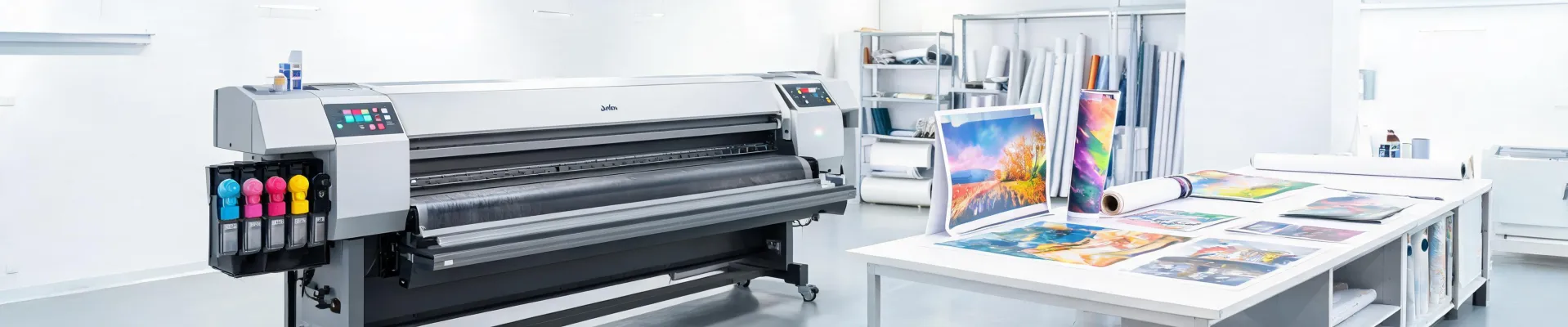
Our account rep at Mutoh had been pushing us toward their eco solvent printer line—specifically the ValueJet series—for sticker work, plus a DTF unit for garment transfers. The initial quote was higher than the Citronix, but the line items included things the other quote didn't: full installation, operator training, and a documented parts and maintenance schedule.
Here's something vendors won't tell you: the first quote is almost never the final price for ongoing relationships. There's usually room for negotiation once you've proven you're a reliable customer. But I'm getting ahead of myself.
The Numbers That Changed My Mind
Let me walk through the TCO model, because this is where the real story lives.
I compared costs across five vendors over two months. The Citronix quoted $54,200 for their inkjet printer. Mutoh quoted $68,400 for their eco solvent printer with the full installation package. I was leaning toward Citronix—a $14,200 difference is a real number, and the spec sheets looked comparable.
But then I dug into consumables and maintenance schedules, and the picture flipped.
The Citronix quote included $1,800 for a "starter ink kit" that Mutoh's quote bundled into the base price. The Citronix maintenance schedule recommended damper replacement every 12 months—so I called their service department to get a part price. For the Mutoh, the mutoh printer damper replacement kit ran $240 per print head. For the Citronix, the equivalent part was $380, with a three-week shipping delay because it had to come from overseas.
The bigger issue was ink. The Citronix used a proprietary ink system priced at $28 per liter. Mutoh's eco solvent ink was $42 per liter. I almost stopped right there—the ink cost alone seemed like a dealbreaker for Mutoh. Then I checked the coverage data.
This is the part that made me feel like an amateur. The Citronix's "per-liter" cost assumed an ink density that their own documentation didn't support. When I calculated actual consumption based on test prints I requested from both vendors, the Citronix used approximately 22% more ink per square meter than the Mutoh eco solvent printer on identical media. Adjusted for real coverage, the cost per square meter actually favored Mutoh by about 6%.
I assumed "same specifications" meant identical results across vendors. Didn't verify. Turned out each had slightly different interpretations of what "standard print quality" means.
The Damper Conversation
Here's where the story took another turn. During the evaluation, our existing solvent printer (an older unit from a different brand) started showing banding on every print. Our technician traced it to a failing damper. That incident is what really made me understand why damper discussions matter so much in this industry.
For those who haven't lived inside a printer: a damper sits between the ink line and the print head. It does two jobs—it absorbs pressure fluctuations from the ink delivery system, and it traps debris before ink reaches the nozzle. When a damper becomes clogged or wears out, print quality degrades in ways that look exactly like print head failure. And head replacements are dramatically more expensive than damper replacements.
Industry consensus is to replace dampers when you replace print heads, or every 12–24 months depending on ink type and production volume. That's a maintenance cost many buyers never factor into their purchasing decision.
When I audited our 2023 spending, I found that 17% of our maintenance budget went to late-stage failure fixes—issues that would've been caught earlier with a better preventive maintenance schedule. That number stuck with me. It made Mutoh's parts availability picture look considerably more attractive.
The DTF Sublimation Angle
Now, the garment side of the business. We needed a DTF printer for sublimation-style transfers on polyester apparel. To be precise: DTF (direct to film) and sublimation are actually different processes. DTF uses a film transfer with adhesive powder; true sublimation uses disperse dyes that bond with polyester fibers. But in the trade, people say "dtf printer sublimation" to describe the whole garment-decorating capability. It drives me a little nuts, but that's the vocabulary of the industry.
The point is: we needed a single machine that could handle sticker production and garment film printing. That's a wide range of applications.
While I was in the research phase, I also looked into a separate "dtf printer for stickers" configuration — thinking it might be more cost-effective than a full eco-solvent upgrade. That path led to additional maintenance complexity: stocking two different ink systems, two different damper families, and two different print head architectures. The cost modeling didn't favor it.
Mutoh's DTF workflow is designed around their eco solvent platform, which meant one ink system across both sticker and film work. The Citronix—as I learned during a factory demo we attended—used a completely separate print head architecture for its DTF configuration. That meant stocking two entirely different sets of spare parts: dampers, print heads, wiper seals, the works.
This is where the heart of the story is, my gut versus the spreadsheet. The numbers said Citronix—21% cheaper on the initial quote with comparable spec sheet performance. My gut said something was off. Not anything concrete, just the accumulated skepticism of six years of tracking every invoice. I'm glad I listened.
The Test Print Showdown
We asked both vendors to produce identical test prints on the same media. This is standard practice, and any vendor serious about B2B work will agree. (Note to self: we should have done this earlier in the evaluation process.)
The Citronix test print was fine—not great, fine. Colors were close, but the Pantone matching target we included had Delta E values averaging 3.1. Industry standard for brand-critical colors is Delta E less than 2. The Mutoh test print, using the same Pantone targets, averaged Delta E of 1.7. For the red corporate color on an existing client's stickers, the Mutoh required zero manual adjustment. The Citronix needed a reprint and two profile tweaks.
To be fair: color matching depends on profiles, media, and operator skill. A very skilled operator could probably bracket the Citronix's color closer to target. But that skill costs money and time—and it's a dependency you don't want on every reorder.
My cost calculator kept pointing the same direction. The Citronix would save us $14,200 on day one. But over 36 months, factoring in higher consumable costs, more expensive spare parts, longer service delays, and the likely need for additional color management work, the Mutoh route was projected to save us approximately $8,400 annually. That's a swing of over $25,000 in the first three years—which is why I say in the title that the "cheaper" printer would've cost us more in the long run.
The Outcome
We went with Mutoh. In August 2024, we signed the purchase order for the Mutoh ValueJet eco solvent printer. We've been running it hard for six months now (as of February 2025), and here's what I can tell you:
- Out-of-box uptime has been 98.4% over the first 6 months of production.
- We've replaced exactly one damper—routine preventive maintenance, not a failure.
- The same Pantone red that required reprints on the Citronix now matches within Delta E 1.2 on the first pass, consistently.
- DTF film work for garment clients has grown to 19% of our production hours—up from 6% before this machine arrived.
We also negotiated a parts arrangement with the Mutoh dealer that covers scheduled damper replacements as part of an annual service package. That wasn't on the first quote. It came from building the relationship. (I really should write a formal guide to negotiating maintenance packages—we learned a lot in this process.)
What I Learned
What was best practice in 2020 may not apply in 2025. The fundamentals of print equipment procurement haven't changed—you still need to compare total cost, not sticker price. But the execution has transformed: ink chemistry, consistency standards, and maintenance intervals are all more nuanced than spec sheets suggest.
I learned never to assume the quote includes the things that matter. Ask specifically about dampers. Ask about print head replacement intervals. Ask what the "warranty" actually covers when a part fails at month eleven. A vendor who answers openly is a vendor who believes in their product. A vendor who hesitates? That's a signal.
If you're comparing a Citronix inkjet printer or evaluating mutoh printer damper costs or researching a dtf printer sublimation setup—run your own TCO numbers with actual ink coverage data, real part prices, and realistic downtime risk. Not the marketing numbers. The ones you verify.
Our new capacity paid for itself faster than our finance team projected. The lesson stands: the cheaper option is only cheaper if it's reliable. (And yes, we still keep an eye on new Citronix releases—competition keeps everyone honest.)
If you're in the middle of a similar evaluation, build the TCO model, request the test print, check the damper pricing, and get the maintenance schedule documented in writing before you sign anything. The process takes longer than a quote comparison. It's worth it.

Elise Marceau
Elise Marceau is an LED display and digital-signage systems analyst covering LED video walls, modular screens, transparent LED, control processors, and indoor or outdoor signage. She applies IEC 62368-1 safety principles while comparing pixel pitch, luminance, contrast, refresh rate, colour uniformity, viewing angle, ingress protection, power density, module serviceability, and signal redundancy. Her specification guides help integrators, venue operators, retailers, and procurement teams align viewing distance, ambient light, content format, installation access, electrical load, and lifecycle support.