I Bought a Budget UV Printer and It Cost Me $14,000. What I Learned About Mutoh Printer Repair Service, Ink Suppliers, and DTG Printers
2026-08-27 · Elise Marceau
In March 2021, I stood in my own shop staring at a machine that could only print two colors before the printhead started banding. The printer had been running for 22 days. The vendor's phone number now rang to a voicemail that didn't even have a name on it.
That machine was my 'budget UV printer.' It looked like a deal on paper. $7,200 for a flatbed table, two print heads, and a 'free' RIP software license. I knew I should have asked for a service agreement before paying, but I thought, what are the odds? The odds caught up with me quickly.
I run a small garment decoration shop. We do screen printing, heat transfer, and a growing amount of direct-to-garment work. In early 2021, I decided we needed two new capabilities: a budget UV printer for custom signs, acrylic awards, and plastic parts, and a DTG textile printer for bringing white-shirt jobs in-house. I also needed a shipping label printer. That last one started my whole obsession with total cost of ownership.
Why I chose a budget UV printer
I'll be honest: the budget UV printer quote was tempting. It was $7,200 delivered. A name-brand flatbed was in the $18,000 to $25,000 range at the time. I convinced myself the big brands were overcharging for the same parts. After all, the spec sheet said 'industrial quality' and 'high print speed.' It even came with a 12-month warranty.
Here's the thing: the warranty was useless because the vendor's tech support was a WhatsApp account. When I asked about installation, they sent a PDF. When I asked about spare parts, they said 'check our website.' When the machine finally arrived, the software was a generic RIP that wasn't tuned for the printheads. Colors were inconsistent, profiles were missing, and the 'free training' was a 40-minute YouTube video with bad audio.
I learned to ask 'what's NOT included' before 'what's the price.' That's the single best lesson I can give anyone.
The breakdown that changed everything
In April 2021, the printhead started dropping nozzles. I knew I should have ordered a spare head with the initial purchase, but I thought, I'll never need it that soon. That was the one time it mattered.
I called the vendor. No answer. I tried email, then WhatsApp, then the support hotline in the sales contract. The hotline was disconnected. I reached out to a local repair shop that happened to service Mutoh printers. They weren't my brand, but they agreed to look at it. The diagnosis: the waste ink system was poorly designed, a damper had failed, and the profiles I'd been given were causing over-inking. The repair cost was $1,150, plus $300 in parts that took 12 days to ship.
No surprise: the budget printer ended up costing more than a good used printer. Add in rush shipping, reprints, wasted media, and four service visits over the next year, and I was down about $14,000. Maybe $14,500, I'd have to check my spreadsheet. That's not including the jobs I turned away.
Why does this matter? Because buying a printer is not a one-time expense. It's a system. The machine, the support, the ink, the parts, the service plan, and the training all count. A supplier who lists those items upfront is giving you the real price. A supplier who hides them behind a 'call for quote' is giving you a lottery ticket.
What I did right: Mutoh printer repair service and ink suppliers
By late 2022, I'd rebuilt enough confidence to buy a better machine. This time, I didn't start with price. I started with a support plan.
I called a local dealer and asked directly about their Mutoh printer repair service coverage. They said they had three factory-trained techs in the area, a spare parts shelf for common failures, and a response-time promise of two business days. I asked for a written service agreement. They sent one. That felt different.
Then I asked for Mutoh ink suppliers. I wanted an authorized distributor list with current prices per liter, not a vague 'we can get it for you.' The dealer sent a one-page sheet with contact names, emails, and price per color. No games. That was the moment I thought, okay, this is what transparent pricing looks like.
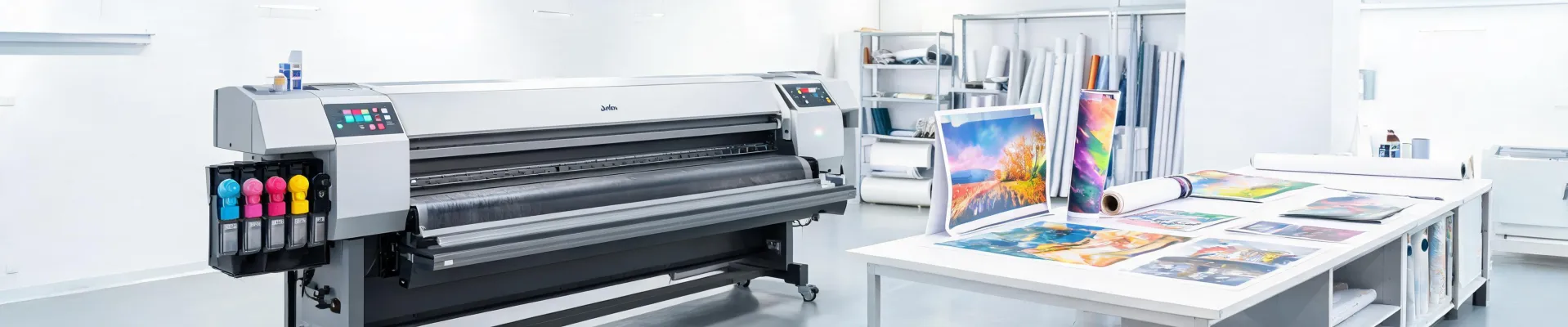
I ended up buying a Mutoh flatbed. Not because it was the cheapest. In fact, the initial quote was more than I planned to spend. But the quote had every line item on it: printer, installation, training, shipping, a spare printhead kit, and the first-year service plan. There was a section for 'available add-ons,' and it was clearly optional. I never felt like I was missing something.
Pricing context as of January 2025: Publicly listed prices for entry-level flatbed UV printers range from about $9,000 to $25,000 depending on table size, printhead configuration, and included software. Shipping, installation, and initial operator training are often quoted separately. Verify current rates with the vendor before comparing.
I remember telling my business partner: 'The surprise isn't the price. It's how much hidden value comes with the expensive option.' A few months later, when I called the dealer about a minor belt noise, they scheduled a tech for the next Tuesday and called back to confirm. I almost didn't know what to do with that.
I'm not saying Mutoh is the only honest brand. Plenty of dealers do good work. But Mutoh was the one that made the hidden costs visible to me, and that transparency is why they earned the order.
DTG textile printer? Only after the same checklist
I also finally moved forward with a DTG textile printer. The first quote I got was for a used DTG textile printer with no warranty and no training. Tempting. But I had already learned my lesson. I asked the seller three questions. Who repairs it? Where are the parts? What are the consumables? They couldn't answer any of them.
Dodged a bullet there. Instead, I bought a smaller, new DTG textile printer from the same dealer who sold me the Mutoh. The price was higher, but the quote included a training session, a starter set of pretreatment solution, and a list of compatible inks. I didn't need to hunt for suppliers or pray that the printhead wouldn't clog. That's the kind of service you're actually paying for.
The thermal Bluetooth printer vs inkjet printer side quest
Before anyone asks: yes, I also had to solve the shipping label problem. I went through the thermal Bluetooth printer vs inkjet printer debate for a second location. The thermal Bluetooth printer was the right answer, for the same reason almost every time: lower cost per label, no smudging, and no 'inkjet head is clogged because you didn't print for two days' nonsense. But honestly, the label printer debate was easy compared to the wide-format decision. Label printers rarely need a service contract. Production printers do.
What I would tell anyone buying a printer today
Get the service plan in writing. If a vendor won't put a response-time promise, parts pricing, or technician availability in writing, walk away.
Ask for the ink supplier list. Authorized ink suppliers and clear pricing are not a secret. If they are, you're about to become a hostage.
Price the whole system. Calculator: machine + installation + training + 2 years of service + 1 year of ink + expected downtime. Compare that number against any 'budget' sticker price.
Never buy a DTG textile printer without a pretreatment plan. The ink is only half the process. If the vendor can't explain pretreatment, they don't understand their own machine.
Don't let 'budget UV printer' become a four-letter word. I'm not saying every budget printer is bad. I'm saying 'budget' isn't a spec. The actual spec is: what happens when it breaks?
Look, I've made my share of expensive mistakes. This one alone cost me roughly $14,000, though I might be misremembering the exact figure because I stopped counting after a while. But I documented the whole thing, and now I run through a pre-purchase checklist before any new piece of equipment enters the shop.
The bottom line: transparent pricing and a real support network aren't 'nice to haves.' They're the main purchase. A budget UV printer that nobody will fix, from a vendor that hides the real cost, is never budget. I learned that the expensive way. You don't have to.

Elise Marceau
Elise Marceau is an LED display and digital-signage systems analyst covering LED video walls, modular screens, transparent LED, control processors, and indoor or outdoor signage. She applies IEC 62368-1 safety principles while comparing pixel pitch, luminance, contrast, refresh rate, colour uniformity, viewing angle, ingress protection, power density, module serviceability, and signal redundancy. Her specification guides help integrators, venue operators, retailers, and procurement teams align viewing distance, ambient light, content format, installation access, electrical load, and lifecycle support.