What I Learned Buying a Mutoh Large Format Printer, an RGB DTF Printer, and an Erasmart DTG Printer
2026-09-15 · Elise Marceau
-
The Tuesday I Thought a Mutoh Large Format Printer Could Do Everything
-
The Background: Signs Were Easy. Apparel Was a Different Animal.
-
The RGB DTF Printer: The Machine Arrived Before the Workflow Did
-
The Erasmart DTG Printer: Great for Cotton, But Pretreat Is Not Optional
-
The Mutoh Large Format Printer and Mutoh Printer Cutter Stayed in Their Lane
-
The Sublimation Question: What Is the Best Sublimation Printer for Home Use?
-
The Result: Separate Workflows, Better Quotes, Fewer Disasters
-
What I Would Tell a Print Shop Owner Today
The Tuesday I Thought a Mutoh Large Format Printer Could Do Everything
In February 2023, I was standing next to our Mutoh large format printer at 6:40 a.m. We had a 14-person shop, two wide-format machines, and a growing number of customers asking for shirts. I had been handling print production and equipment orders for nine years. I had personally made and documented enough mistakes to waste roughly $18,000 in my career. You would think I knew better.
When I first started adding apparel printing, I assumed if a machine could print a 4x8 sign, it could print on a T-shirt. Three months, one clogged printhead, and about $6,200 later, I realized how wrong that assumption was. This is the story of how we sorted out Mutoh wide-format work, an RGB DTF printer, an Erasmart DTG printer, and the sublimation question that keeps coming up from home-based sellers.
The Background: Signs Were Easy. Apparel Was a Different Animal.
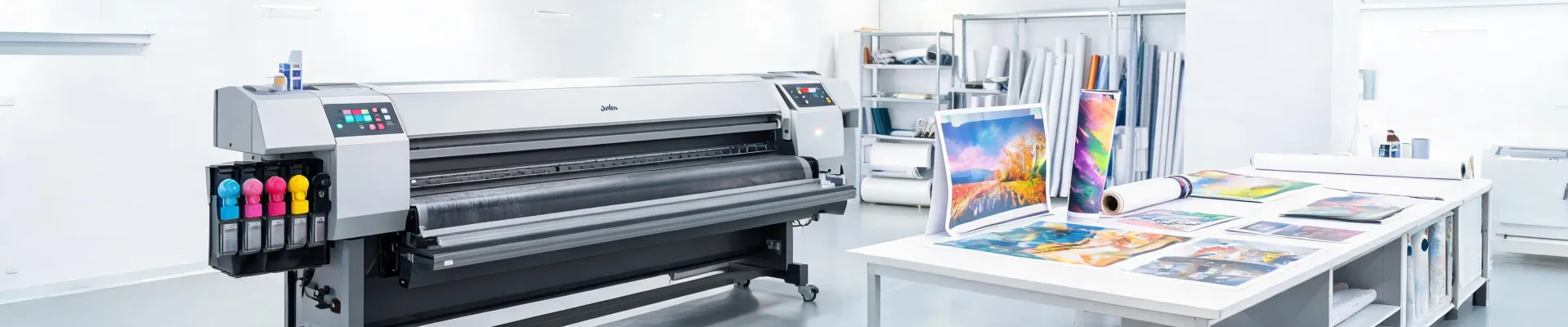
We already ran a Mutoh large format printer for banners, window graphics, and decals. We also used a Mutoh printer cutter for contour cutting. That workflow was fairly stable. I could quote a job, nest it, print it, cut it, and ship it. The RIP was dialed in. The operators knew the maintenance schedule. The machine was not the problem.
The problem was that customers wanted decorated apparel. A local gym wanted 120 hoodies. A school wanted 60 cotton T-shirts. A real estate office wanted 200 polyester lanyards and mousepads. I said yes to all of it, because I thought one or two new printers would cover everything.
That was the first mistake. I treated printing as one category. It is not. Wide-format, DTF, DTG, and sublimation solve different problems. They use different inks, different substrates, different pretreatments, and different finishing steps. What was best practice in 2020 may not apply in 2025, but the fundamentals of substrate compatibility have not changed.
The RGB DTF Printer: The Machine Arrived Before the Workflow Did
In June 2023, we bought an RGB DTF printer. The sales rep said it would handle cotton, poly, blends, and small runs. I believed him. I did not ask enough about powder shakers, curing ovens, ventilation, or daily white-ink circulation. I said we would figure it out. That is never a good sentence in equipment procurement.
The RGB DTF printer itself was decent. The workflow was not. We received 120 poly-cotton hoodies and started printing transfers. The white ink channel clogged on day three (ugh, again). We lost 38 transfers. Then we discovered the transfer sizes were wrong. I said standard DTF transfer size. The customer heard full-front print. Result: 38 transfers that were too small for the layout. We reprinted, recured, and repressed. The mistake cost about $1,900 in blanks, ink, film, powder, and labor.
That was my communication failure. Same words, different meanings. I created a one-page pre-press form after that. It asks for print size, substrate, fabric content, color, wash-test requirement, and deadline. It sounds basic. It has caught 47 potential errors in the past 18 months.
Industry standard color tolerance is Delta E < 2 for brand-critical colors. Delta E of 2-4 is noticeable to trained observers; above 4 is visible to most people. Reference: Pantone Color Matching System guidelines. For DTF and DTG, that tolerance is harder to hold across fabric blends, but it is still the target.
We also learned that DTF is not automatically cheaper than DTG. Everything I had read said DTF was the low-cost option. In practice, for 100% cotton retail shirts, DTG had a softer hand feel and less finishing labor. For poly-cotton blends and small runs, DTF was more flexible. The right answer depended on the order, not the machine.
The Erasmart DTG Printer: Great for Cotton, But Pretreat Is Not Optional
By September 2023, we were evaluating an Erasmart DTG printer. A customer wanted direct-to-garment prints on premium cotton tees. The samples looked good. The Erasmart DTG printer was slower than DTF, but the print quality on cotton was better than we expected. I thought this would be the easy part. It was not.
We ran 60 shirts without dialing in the pretreat spray. We used too much in some spots and too little in others. The prints looked fine on the rack. After one wash test, several shirts faded and cracked. We had to replace 22 of them. That error cost about $1,200. The lesson was simple: DTG is not just a printer. It is a pretreat, heat-press, and curing system. If you skip any step, you are donating shirts to the reject bin.
Today, if we added an Erasmart DTG printer, I would require three things before signing: a wash-test protocol, a dedicated pretreat station, and a humidity-controlled room. I am not 100% sure every shop needs that level of control, but for retail-quality DTG, it is close to mandatory.
The Mutoh Large Format Printer and Mutoh Printer Cutter Stayed in Their Lane
Here is the counterintuitive part. After all that apparel chaos, we did not replace our Mutoh large format printer. We stopped asking it to do things it was never designed to do. The Mutoh stayed on signage, decals, and vehicle graphics. The Mutoh printer cutter stayed on contour-cut jobs. We stopped trying to make one workflow cover every substrate.
The best practice in 2020 might have been to buy the biggest printer you can afford and push every job through it. In 2025, that thinking is risky. The market changed. Print service providers now have more specialized options, and the cost of a bad match shows up in rework, not just hardware. The U.S. commercial printing market is approximately $85 billion annually (Source: PRINTING United Alliance, 2024). That is a lot of competition. You cannot afford to lose a week to a preventable workflow error.
For our Mutoh large format printer, we still use 150 DPI for banners viewed from 10 feet away, and 300 DPI for close-read decals. That is not a brand preference. It is an industry minimum. Standard print resolution requirements: commercial offset printing is 300 DPI at final size; large format posters viewed from distance can be 150 DPI. Reference: Print Resolution Standards.
We still use the Mutoh large format printer for high-volume roll work. We still use the Mutoh printer cutter for clean contours. The difference is that we no longer expect them to decorate a hoodie.
The Sublimation Question: What Is the Best Sublimation Printer for Home Use?
In January 2024, a friend asked me what is the best sublimation printer for home use. She wanted to make tumblers, mugs, and polyester shirts from her spare room. I almost gave her a model number. Then I remembered our $6,200 mistake. I gave her a checklist instead.
For home sublimation, the printer is only one part. You need a heat press, sublimation paper, compatible blanks, ICC profiles, and a space with decent ventilation. A converted desktop printer can work, but it must have a reliable ink system and support for sublimation inks. A 13x19 inch model is usually enough for mugs, tumblers, and small shirts. A 24-inch wide-format sublimation printer is probably overkill unless you are producing rolls of fabric or high volumes.
The best sublimation printer for home use is not the cheapest one. It is the one you can maintain consistently. If you print once a month, clogging will be your enemy. If you print every day, consumable cost matters more. I think the mid-tier option often beats both the bargain and the premium models for a home setup. Take that with a grain of salt: I have not tested every home sublimation printer on the market.
One more technical note: sublimation only bonds to polyester or specially coated substrates. Cotton is not a sublimation blank. If someone wants cotton, they need DTG or DTF, not sublimation. Getting this wrong is one of the fastest ways to waste a weekend.
The Result: Separate Workflows, Better Quotes, Fewer Disasters
By the end of 2024, our shop had four distinct production paths:
- Mutoh large format printer for banners, signs, and roll media.
- Mutoh printer cutter for contour-cut decals and labels.
- RGB DTF printer for poly-cotton blends, small runs, and transfer jobs.
- Outsourced DTG for 100% cotton premium orders until volume justifies an Erasmart DTG printer in-house.
We also wrote a pre-purchase checklist that I now use for every equipment inquiry. It includes substrate tests, consumable costs, maintenance schedule, support response time, and a wash-test or durability test for the final product. That checklist has caught 47 potential errors in the past 18 months. It has not made us perfect. It has made us slower in the right places.
The biggest lesson is that the industry is evolving. DTF was niche a few years ago. Today it is a standard short-run tool. DTG and sublimation have become more accessible for small shops and home users. But the old rules still matter: match the technology to the substrate, test before you promise, and never assume one printer can do everything.
What I Would Tell a Print Shop Owner Today
If you are looking at a Mutoh large format printer, a Mutoh printer cutter, an RGB DTF printer, an Erasmart DTG printer, or asking what is the best sublimation printer for home use, start with the job mix. Not the machine. Not the price. Not the YouTube review.
Write down the substrates, volumes, colors, and finishing steps. Then ask which workflow handles that mix with the least rework. The answer might be a Mutoh large format printer for signage and a DTF printer for apparel. It might be DTG for cotton and sublimation for polyester. It might be outsourcing until the volume makes sense.
I wish I had done that before I assumed a sign printer could print a shirt. It would have saved $6,200 and a lot of embarrassment. But at least now we have the checklist. (Note to self: update the wash-test section before the next hoodie order.)

Elise Marceau
Elise Marceau is an LED display and digital-signage systems analyst covering LED video walls, modular screens, transparent LED, control processors, and indoor or outdoor signage. She applies IEC 62368-1 safety principles while comparing pixel pitch, luminance, contrast, refresh rate, colour uniformity, viewing angle, ingress protection, power density, module serviceability, and signal redundancy. Her specification guides help integrators, venue operators, retailers, and procurement teams align viewing distance, ambient light, content format, installation access, electrical load, and lifecycle support.