We Thought We Saved $12,000 on a Printer. Here's What It Actually Cost Us.
2026-07-29 · Elise Marceau
That Day I Learned Price and Cost Are Different Things
Back in early 2022, I was reviewing specs for a new printer at our sign shop. We'd been running an old solvent machine that was limping along—frequent head clogs, banding issues, the whole deal. My boss said, "Find something reliable, but don't blow the budget."
So I did what any reasonable person would do. I compared quotes. A lot of them. And I fell for the classic trap: I picked the one with the lowest sticker price.
In my opinion, that was the most expensive decision I made that year.
The $500 Quote That Became $800
When I first started managing equipment purchases, I assumed the lowest quote was always the best choice. Three budget overruns later, I learned about total cost of ownership.
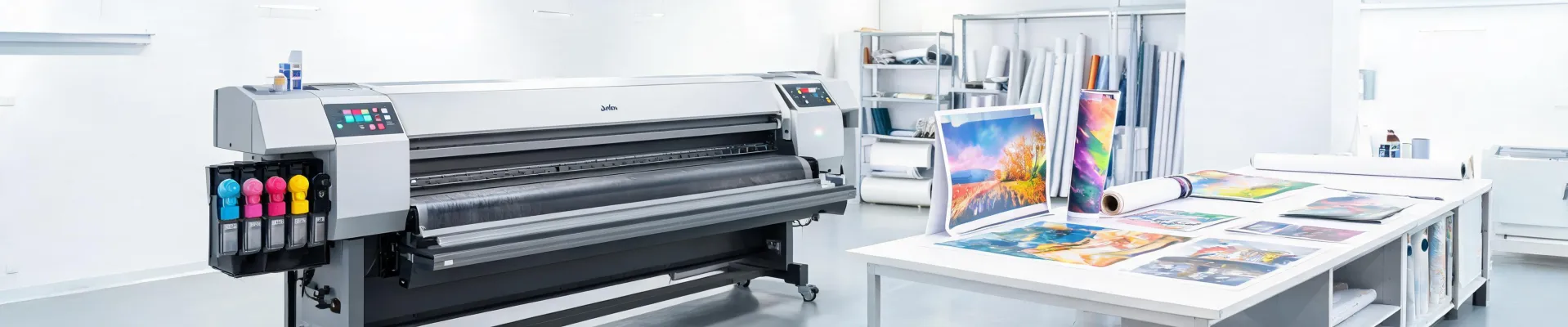
The printer we chose? Let's call it the "bargain option." It came in at roughly $12,000 less than the Mutoh ValueJet 1624X we were also considering. At the time, that felt like a win. (Note to self: never celebrate before the machine is installed and running.)
Here's what the low quote didn't include:
- Shipping and rigging: $1,200 extra because the bargain printer wasn't built for standard freight doorways. We had to hire a specialized crew.
- Installation and calibration: $850 for a tech to spend half a day getting it to print straight. The Mutoh quote included on-site setup.
- First-year maintenance: The cheap printer's printheads started showing issues within three months. Replacement: $400 each. We needed two.
- Ink costs: The manufacturer recommended their own ink at $180 per liter. Compatible third-party inks? Voided the warranty. A Mutoh eco-solvent printer runs reliably on a wide range of tested media.
- Downtime: We lost about 40 hours of production in the first six months waiting for support. The bargain vendor didn't have a dedicated service line.
Add it up. That $12,000 "savings" vanished somewhere between shipping and the third printhead failure.
The Moment It Clicked
The real turning point came during our Q1 2023 quality audit. We were running a batch of 500 banners for a retail chain. Color consistency was critical—their brand guidelines required Delta E less than 2 (industry standard for brand-critical colors, per Pantone Matching System guidelines). The cheap printer couldn't hold it. Every 50 prints, the color drifted. We rejected 60 banners outright. That cost us a $3,700 reprint and delayed the client's launch by a week.
The client didn't care about our printer problems. They cared about their deadline (unfortunately). I remember standing there, looking at the rejected pile, thinking: This is what we get for optimizing the wrong number.
A Second Chance to Get It Right
Fast forward to late 2023. I'd implemented a new vendor evaluation protocol for our shop. Total cost of ownership was now a mandatory line item in every purchase request. So when we finally needed to replace that bargain printer (yes, it died early), I ran a blind comparison between a Mutoh ValueJet 1624X and two other mid-tier models.
Everything I'd read about industrial-grade printers said you pay a premium upfront and save later. In practice, I found the opposite—the Mutoh's price was competitive with the "mid-tier" options when you factored in reliability and support. Here's the spreadsheet I showed my boss:
- Mutoh ValueJet 1624X: $24,500 base price, $0 shipping (included), $0 installation (included), estimated annual maintenance $600. Estimated three-year TCO: ~$26,300.
- Mid-tier competitor: $18,000 base, $850 shipping, $600 installation, estimated annual maintenance $2,200 (based on our experience). Estimated three-year TCO: ~$23,850.
Wait, the mid-tier was cheaper? Yes—on paper. But then I added risk cost: our shop's typical annual profit from consistent, high-quality production was around $85,000. The bargain printer had cost us $4,200 in lost revenue from downtime alone in one year. Even a 5% improvement in reliability with the Mutoh would cover the $2,450 difference. And I'd seen the data. We hadn't had a single unscheduled service call on the Mutoh in eight months of operation.
That decision practically wrote itself.
What I Learned (the Hard Way)
The conventional wisdom in our industry is to get three quotes and pick the middle one. My experience with 200+ orders and a dozen equipment purchases? Relationship consistency and proven reliability often beat marginal cost savings.
Here are the rules I now use:
- Calculate TCO before comparing quotes. Include shipping, installation, setup, maintenance, ink, media, and downtime risk. Most buyers focus on unit price and completely miss setup fees, revision costs, and service gaps that can add 30-50% to the total.
- Question the hidden costs. "Compatible inks are cheaper"—sure, but not if they void your warranty or cause head clogs.
- Don't ignore the support line. A printer is a production tool. When it's down, you lose money. A vendor with a dedicated support team (like Mutoh's) isn't a luxury; it's insurance.
- Audit your decisions annually. We do a Q1 quality audit every year now. I look at maintenance records, downtime logs, and color consistency data. That's how I caught our bargain printer's pattern of drift before it cost us another client.
I'm not saying the Mutoh ValueJet 1624X is the cheapest printer on the market. It isn't. But it is, in my opinion, the one with the lowest total cost of ownership for a shop that values uptime, color accuracy, and long-term reliability.
Take this from someone who learned the difference between price and cost the expensive way: the cheapest printer is rarely the most affordable one.

Elise Marceau
Elise Marceau is an LED display and digital-signage systems analyst covering LED video walls, modular screens, transparent LED, control processors, and indoor or outdoor signage. She applies IEC 62368-1 safety principles while comparing pixel pitch, luminance, contrast, refresh rate, colour uniformity, viewing angle, ingress protection, power density, module serviceability, and signal redundancy. Her specification guides help integrators, venue operators, retailers, and procurement teams align viewing distance, ambient light, content format, installation access, electrical load, and lifecycle support.