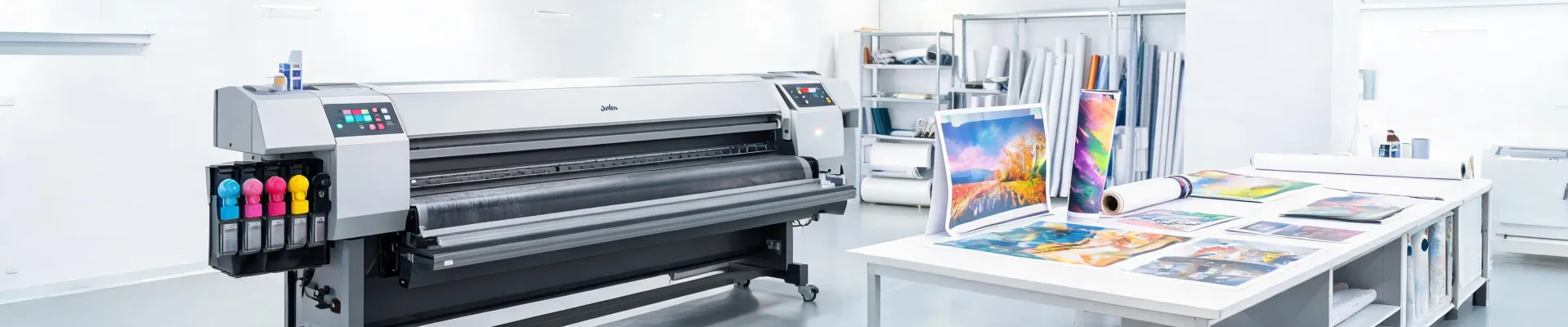
The Mutoh XpertJet 1462UF Price Isn’t the Real Problem
2026-09-24 · Elise Marceau
I’m the office administrator for a 32-person sign and garment shop. I manage all equipment and consumables ordering—roughly $240,000 annually across 11 vendors. I report to both operations and finance.
In early 2024, we started looking for a UV flatbed. I did what any admin does: I searched Mutoh XpertJet 1462UF price, Mutoh vinyl printer, MG-300 UV printer, Anker UV printer, and DTF printer reviews 2024. Then I made calls.
Half the dealers wouldn’t give me a number. The other half sent a brochure and a “call for quote” link. One rep asked how many machines I was buying before he asked what I printed. Another acted like I was wasting his time because our first order was one printer, not a fleet.
Annoying. Real. But not the real problem.
The surface problem is price opacity. The deeper problem is the buying model.
To be fair, I get why dealers protect pricing. A Mutoh XpertJet 1462UF price isn’t a sticker. It depends on ink configuration, vacuum zones, RIP, installation, warranty, freight, and training. A Mutoh vinyl printer quote changes if you add take-up reels, heaters, or a cutter. The MG-300 UV printer and an Anker UV printer may sit in the same search results but solve different problems. And DTF printer reviews 2024 are often useless because reviewers compare specs, not ownership costs.
That said, the dealer behavior isn’t only about configuration. It’s a filter.
What I mean is that industrial printer dealers don’t make their real money on the box. They make it on consumables, service contracts, parts, and repeat purchases. A buyer who asks only “how much?” looks like a one-time transaction. A buyer who asks about uptime, ink yield, head replacement, and local technical support looks like a relationship. The first buyer gets a vague quote. The second gets a serious conversation.
“The lowest quoted price often isn’t the lowest total cost.”
I learned that the hard way. It took me three years and about 140 purchase orders to understand that vendor responsiveness is not about how much you spend today. It’s about how clearly you communicate what you will need tomorrow.
I went back and forth between a lower-cost Mutoh vinyl printer package and a higher-spec UV flatbed for six weeks. The vinyl printer was familiar, easier to justify, and cheaper upfront. The flatbed opened new work—rigid signs, promotional items, short-run panels. I ultimately chose the flatbed because our top three customers kept asking for jobs we were outsourcing. But the decision kept me up at night. On paper, the vinyl printer made sense. My gut said we’d hit a ceiling in eight months.
The cost isn’t the invoice. It’s the downtime, the paperwork, and the wrong assumptions.
I still kick myself for not asking one dealer for a written service SLA. If I had, we’d have had grounds to push back when a consumables order sat in limbo for 11 days. That was only ink and media. If it had been a printhead or a main board, we’d have missed a week of production.
For a small shop, that’s not an inconvenience. It’s payroll.
Here’s what I’ve seen the real costs look like:
- Downtime: A UV printer down during sign season means missed install dates. Customers don’t care that your dealer is waiting on a part.
- Consumables lock-in: The machine price can look fine until you price ink, cleaning solution, media, and waste. Ask for a 36-month consumables estimate at your monthly volume.
- Parts and service: A local tech who knows the machine is worth more than a 5% discount. Ask how many trained technicians cover your ZIP code.
- Training gaps: An operator who wasn’t trained on daily maintenance can wreck a head, ruin a job, or create a safety issue.
- Finance friction: In 2022, I found a great price from a new vendor—$1,900 cheaper than our regular supplier. Ordered $4,200 in materials. They couldn’t provide a proper invoice, just a handwritten receipt. Finance rejected the expense report. I ate $2,400 out of the department budget. Now I verify invoicing capability before placing any order. For a $60,000+ printer, that lesson scales fast.
And there’s a quieter cost: being treated like a small customer. When we started, our orders were small. Some vendors treated us like a nuisance. Others treated us like a future account. The ones who took our $200 orders seriously are the ones I still call for $20,000 orders. Small doesn’t mean unimportant. It means potential. But potential only turns into leverage if you ask the same questions a fleet buyer asks.
What I’d ask before signing anything
I’m not going to quote a Mutoh XpertJet 1462UF price here. It moves with configuration, dealer, installation, warranty, and ink package. Don’t hold me to this, but any number you see online without those details is probably incomplete. Ask the dealer to build the 36-month total cost with your monthly volume, then compare. Verify with a current quote.
Instead, ask these questions in writing:
- What is the 36-month total cost of ownership for our monthly volume—including ink, media, waste, maintenance, parts, installation, training, and extended warranty?
- What is the service SLA? Response time, parts availability, local technician coverage, and loaner policy?
- Can you give me two references within 20% of our monthly volume who run a similar Mutoh, MG-300 UV printer, Anker UV printer, or DTF setup?
- Can we run our own test files—our files, our media, our deadline—before we sign?
- How does the warranty work with third-party ink and media? I want the policy in writing, not a verbal promise.
- What happens when a head fails on a Friday afternoon? Who answers, and when?
- Can you invoice properly, support a lease, and handle tax exemption paperwork without delaying delivery?
That’s it. Not complicated. But it separates a dealer who wants a quick sale from one who will still answer the phone in year three.
Mutoh may be the right call. A different machine may be. The DTF printer reviews 2024 you read may point you somewhere else. The logo matters less than the support system behind it. If you’re evaluating Mutoh, the reasons that keep coming up are industrial-grade reliability, a lineup that covers UV, solvent, DTF, and DTG, and spare parts support. Those matter—but verify them locally. If a dealer won’t answer these questions for a one-machine order, they won’t answer them when you’re bigger, either.

Elise Marceau
Elise Marceau is an LED display and digital-signage systems analyst covering LED video walls, modular screens, transparent LED, control processors, and indoor or outdoor signage. She applies IEC 62368-1 safety principles while comparing pixel pitch, luminance, contrast, refresh rate, colour uniformity, viewing angle, ingress protection, power density, module serviceability, and signal redundancy. Her specification guides help integrators, venue operators, retailers, and procurement teams align viewing distance, ambient light, content format, installation access, electrical load, and lifecycle support.