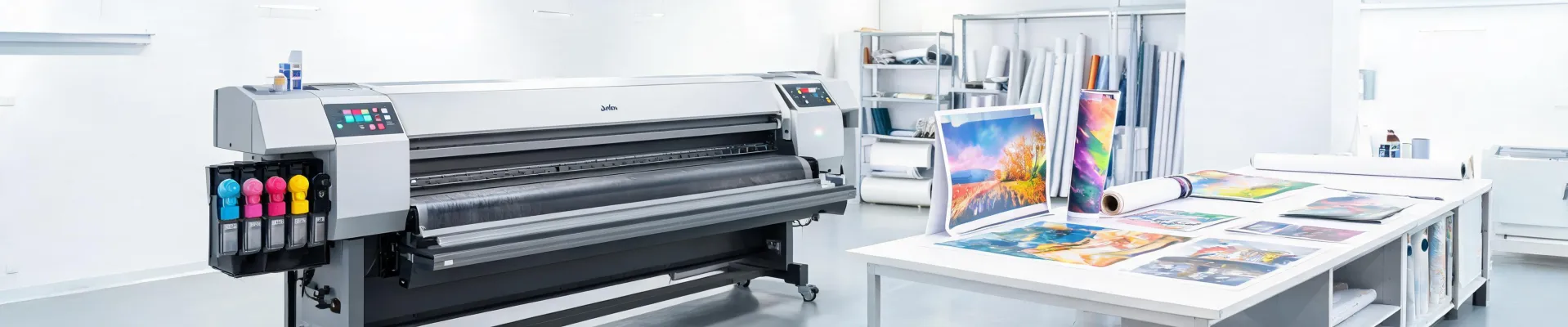
Mutoh XpertJet 661UF UV Flatbed Printer Reviews: Choose by Scenario, Not by Hype
2026-08-28 · Elise Marceau
-
Start With the Job, Not the Brand
- What I Check Before I Trust Any UV Printer Brand
-
Scenario 1: You're a production shop that lives on rigid substrates
-
Scenario 2: You're a garment decorator looking for DTF/DTG
-
Scenario 3: You keep searching for '3d uv label sticker printer'
-
Scenario 4: You want a reliable workhorse and don't want to become an ink chemist
-
How to Tell Which Scenario You're In
-
My Bottom Line
I'm a quality/compliance manager at a wide-format equipment distributor. I review print samples and setup documentation on every machine that goes out—roughly 120 units a year. In Q1 2024, I rejected 4% of first deliveries due to registration or ink-adhesion issues. I'm telling you this so you know where my bias is: I'd rather slow down a sale than send a customer a machine that will fight them in month three.
There is no single 'best UV printer brand.' If you search for 'mutoh xpertjet 661uf uv flatbed printer reviews' or '3d uv label sticker printer,' you'll get a wall of answers, and most of them will be written by people selling you something. I'm going to give you a framework instead. Four scenarios appear over and over when I talk to print shop owners. Find yours, and the product decision gets easier.
Start With the Job, Not the Brand
When I first started this job, I assumed the Mutoh logo on the side of a printer told me everything about its quality. It doesn't. It tells you who engineered it and who backs it, but not which product family is right for you. A Mutoh XpertJet 661UF is a UV flatbed aimed at the 64-inch class. A ValueJet is an eco-solvent roll-to-roll. Different machines, different business models. I learned that the hard way when I recommended the wrong product family to a customer who printed vehicle wraps. (Note to self: check the ink technology before you speak.)
What I mean is this: 'Mutoh' is a verification of quality, not a complete specification. You still need to verify model name, print width, media thickness, ink set, and service plan.
What I Check Before I Trust Any UV Printer Brand
Before I get into scenarios, here is the baseline I use. This applies to every UV printer brand, including Mutoh.
Color tolerance and consistency
Industry standard color tolerance is Delta E < 2 for brand-critical colors. Delta E of 2–4 is noticeable to trained observers; above 4 is visible to most people. Reference: Pantone Color Matching System guidelines. For product labels viewed up close, 300 DPI at final size is still the safe target. If a vendor can't show you a recent sample measured against your target Pantone color, keep looking.
Registration and repeatability
A pretty demo print means nothing if the second pass won't line up on the 40th sheet. I check registration marks, test a multi-layer white/color workflow, and measure the same file across a full bed. This matters most if your jobs involve spot varnish or that '3D' label texture everyone keeps asking about.
The factory details
The phrase 'inkjet printer factory' sounds generic, but it's actually a quality signal. I've stood on assembly floors and watched technicians check platen flatness and gantry alignment instead of just quoting a speed number. I want to say maybe 40% of the brands I've evaluated print their tolerance values publicly—don't quote me on that number, but it's not everyone. A machine that took four hours to line up and a machine that was bolted together in an hour can look the same in a brochure and perform very differently on your floor.
Scenario 1: You're a production shop that lives on rigid substrates
You print on Dibond, acrylic, PVC foam, styrene, and sometimes wood. You need a flatbed, or a hybrid that supports a flatbed table, because your sheets aren't going to survive a roll-to-roll path.
In that case, the XpertJet 661UF is a legitimate candidate, and most of the reviews you'll find focus on this kind of work. Here's what I look for in a 64-inch class UV flatbed review:
- Does it mention pass-to-pass registration on multiple materials? Speed numbers without registration details are useless.
- Does it show how the vacuum zones are set up? If your sheet doesn't lie flat, no printer brand will save you.
- Does it talk about ink adhesion and curing, especially on acrylic? Some UV inks pop off on high-energy surfaces unless the printer has enough lamp power and the right profile.
The 661UF gets called 'production-oriented' in almost every review, and in my experience that label is earned. But it's not a universal answer. If you rarely print thicker than 6mm and your jobs are short runs, a roll-to-roll with a rigid option might be a better use of capital. There's a reason I ask about job mix before I recommend anything.
Scenario 2: You're a garment decorator looking for DTF/DTG
If you're shopping for a UV printer because someone said it could do everything from packaging to labels, stop. For direct-to-film (DTF) transfers, you don't need a UV flatbed. You need a printer designed for DTF, with the right ink set, powder shaker, and curing unit. The Mutoh DTF line exists for that reason. Same for DTG: you need a machine built around garment printing, with white ink circulation and platen handling.
Put another way: choosing a UV flatbed for garment transfers would be like buying a bridge camera to do product photography. It can technically capture an image, but the workflow is wrong.
I haven't toured every DTF printer factory, but I've inspected enough head-strike repairs to know this: garment printing needs a machine designed for downtime and easy access to the head carriage. Build quality matters more than the claimed output speed.
Scenario 3: You keep searching for '3d uv label sticker printer'
You keep searching for '3d uv label sticker printer' and wondering if it's a separate machine. Here's the thing: it isn't a separate product category. It's a description of what a flatbed UV printer can produce when it has the ability to lay multiple layers of ink, usually white and clear varnish, to create a raised effect.
If that's your actual application, look for a UV printer with:
- White ink and varnish/clear ink capability
- Variable thickness or multi-pass layering in the RIP
- Strong vacuum hold-down for die-cut label sheets
- Precise registration for multiple passes
A machine that does this well will also do standard sticker printing. A machine that only prints flat CMYK at high speed will not give you the raised texture your customer is asking for. When I first saw a raised text label printed on a Mutoh flatbed, I assumed it needed a special '3D' printer. In fact, it was a good UV printer with a white/clear ink setup and someone who knew how to build layers in software. The printer is necessary, but the process is the product.
So call it a '3d uv label sticker printer' if you like. I'd rather call it a UV flatbed configured for tactile labels. Either way, start with samples on the exact sticker stock you plan to run. Static charge can jam flimsy label sheets, and you'll want to see how the printer handles them.
Scenario 4: You want a reliable workhorse and don't want to become an ink chemist
This is the 'I just want it to print every day' customer. You're less interested in 3D textures and more interested in predictable color and no surprise service calls. If that's you, prioritize:
- Brands with a local distributor that stocks parts. A printer is a revenue engine, not a hobby.
- An ink path that is proven. Buy the branded ink and don't test the warranty with incompatible third-party inks.
- Built-in quality controls, like printhead height sensors and nozzle checking routines.
I've told customers before: I'd rather see you buy a slightly slower printer from a factory with real quality checks and a service network than a faster machine from a brand that disappears after the invoice. I only speak with this confidence because I've ignored that rule once. We brought in a white-label printer from an unknown importer, the gantry arrived out of alignment, and the 'factory support' was a WhatsApp message that took three days to answer. That machine cost us 22 days of repair downtime and a $6,000 redo on a customer's acrylic sign order. That's when I started checking the factory behind the brand, not just the brand.
This is also where Mutoh logo verification comes in. Counterfeit or grey-market industrial equipment is a real risk, especially in secondary markets. When I inspect a machine, I check the nameplate serial, the control panel display, and the software version. If the logo on the body doesn't match the logo in the service manual, I refuse to certify it. The logo is not a decoration. It's a claim of origin, and you should verify that claim before you pay.
How to Tell Which Scenario You're In
If you're still not sure, answer these:
- What material is your most profitable job printed on? Rigid sheets point to Scenario 1. Garments point to Scenario 2. Label stock points to Scenario 3. If you don't care as long as it runs, that's Scenario 4.
- How often do you change job types? A shop that changes jobs every hour needs more flexibility. A shop that runs the same panel sizes all week needs reliability and speed.
- Who will service the machine? If you can't get a technician within 48 hours, the exact model matters less.
- Do you already have a file with raised text or tactile effects in hand? If not, don't pay extra for '3D' capabilities you'll never use.
The last one is the one I wish more buyers heard. Too many shops buy the most feature-rich UV printer brands and then output flat labels for two years. There's nothing wrong with flat labels, but you've paid for capability you didn't need. Conversely, if you know you'll be asked for raised textures in six months, buy a machine that can do it now.
My Bottom Line
The reviews that rank for 'mutoh xpertjet 661uf uv flatbed printer reviews' will give you a starting point. But the best review in the world won't tell you if your workflow is suited to a 64-inch UV flatbed. It won't know that your customers order thicker sheets than the vacuum can handle, or that your label stock is too flimsy, or that your maintenance staff can't reach the printhead on the right side of the machine.
There's something satisfying about watching a properly configured UV printer build a layered label effect in front of a customer. But that satisfaction only happens when the machine matches the job. So ignore the 'best UV printer brand' headlines. Find your scenario, verify the origin, and ask for a test with your own files. That's how quality actually gets controlled.

Elise Marceau
Elise Marceau is an LED display and digital-signage systems analyst covering LED video walls, modular screens, transparent LED, control processors, and indoor or outdoor signage. She applies IEC 62368-1 safety principles while comparing pixel pitch, luminance, contrast, refresh rate, colour uniformity, viewing angle, ingress protection, power density, module serviceability, and signal redundancy. Her specification guides help integrators, venue operators, retailers, and procurement teams align viewing distance, ambient light, content format, installation access, electrical load, and lifecycle support.