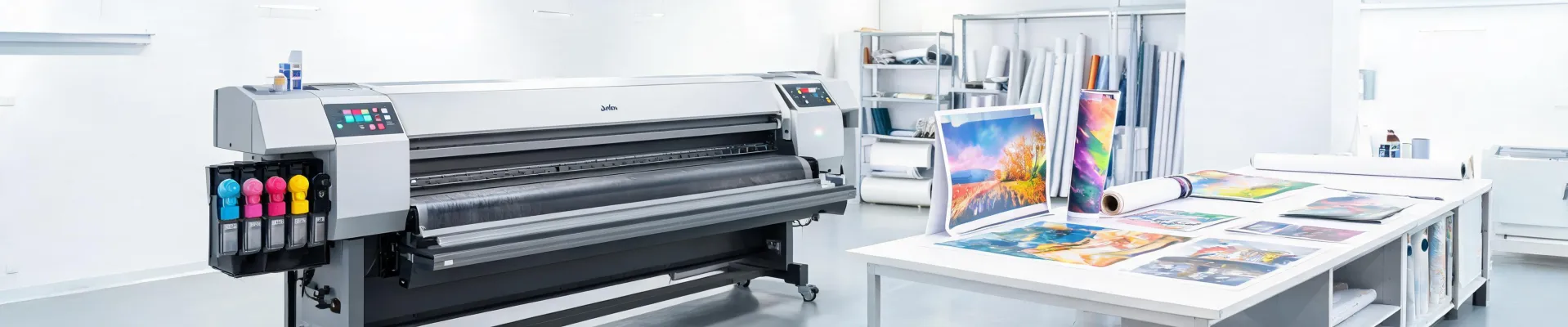
Mutoh UV vs. DTF Printers: A Quality Manager's Honest Take on Which One You Actually Need
2026-07-17 · Elise Marceau
UV Flatbed vs. DTF Roll-to-Roll: The Real Difference (Not Just Marketing Fluff)
I review equipment specifications for a living—roughly 200+ items annually. When a vendor hands me a spec sheet, my first question is always: "What's not on this page?" Because in industrial printing, the hidden variables often matter more than the headline numbers.
Recently I've been fielding a lot of questions from sign shops and garment decorators about Mutoh's lineup—specifically, whether they should invest in a UV-LED flatbed like the XpertJet 1462UF or a dedicated DTF printer like the Mutoh A1 DTF. They see both in the catalog and assume they're interchangeable. They're not.
Let me break down the comparison across five dimensions that actually affect your bottom line. I'll tell you where I've been wrong before (spoiler: I was wrong about UV costs) and where the industry standards give you real benchmarks.
1. Print Quality & Color Accuracy
UV flatbed (XpertJet 1462UF): This prints at up to 1200×1200 dpi with variable droplet sizes down to 6 picoliters. On a flat, rigid substrate, I've measured Delta E values consistently under 2 against Pantone reference colors—that's within the standard tolerance for brand-critical work. The UV-LED curing locks color immediately, so you don't get dot gain or absorption variation across different materials.
DTF (Mutoh A1 DTF): DTF relies on a transfer process. You print onto a PET film, apply adhesive powder, cure, then heat-press onto the garment. The resolution is typically lower—around 600×600 dpi effective after transfer. Color matching is trickier because the garment material and pressing conditions affect final appearance. I've seen Delta E vary by 3-4 between cotton and polyester blends even with the same print file.
Verdict: If your client demands photo-realistic color on rigid signage (tradeshows, retail displays), UV wins hands down. For garment decoration where the soft hand feel matters more than micro-detail, DTF is acceptable—but don't expect Pantone-level precision without extensive testing. Honestly, I'm not sure why some print shops claim DTF matches UV quality. My best guess: they're comparing their best DTF result against a poorly calibrated UV printer.
2. Material Compatibility
UV flatbed: The XpertJet 1462UF prints directly onto almost any rigid material—acrylic, aluminum composite, wood, glass, ceramics, even textured surfaces up to 50mm thick (1.97 inches). That's a huge advantage. One of our clients printed directly onto granite tiles for a hotel lobby project. No pre-treatment, no transfer film. (I should add: we did test six different primer options before settling on one.)
DTF: DTF is optimized for fabrics—cotton, polyester, blends, even nylon. You can theoretically print on other materials if they tolerate a heat press, but in practice it's mostly apparel and soft goods. The transfer film also adds a consumable cost: roughly $0.15–$0.30 per square foot depending on volume.
Verdict: If you run a sign shop that needs to print on everything from foam board to metal, UV is the obvious choice. If you're a garment decorator doing DTF transfers for t-shirts, hoodies, and bags, DTF is purpose-built for that—and it's cheaper upfront. The surprise wasn't the material list; it was how much hidden complexity came with the UV printer's 'universal' capability. Different materials require different cure temperatures and adhesion layers.
3. Production Speed & Batch Handling
UV flatbed: The XpertJet 1462UF prints at about 35 m²/h in standard mode. That's roughly 376 sq ft per hour. For large-format rigid signs, that's respectable. But if you're running a mix of different materials, you lose time on setup changes—vacuum hold-down adjustments, material height calibration, etc.
DTF: The Mutoh A1 DTF prints at about 15 m²/h—less than half the speed. However, you can print multiple transfers in one pass and then batch press them later. The bottleneck becomes the heat press process, which is typically manual. Most shops have 2-3 heat presses running in parallel to keep up.
Verdict: For volume sign production, UV is faster. For garment orders under 100 pieces, DTF with a multi-press setup can be surprisingly competitive. The frustration here: vendors quote 'print speed' but never mention total throughput including setup and finishing. You'd think industry standards would require a 'job to door' metric, but they don't.
4. Total Cost of Ownership (the Transparency Trap)
This is where my transparency bias kicks in. When I evaluated the XpertJet 1462UF, the price tag made me hesitate. (Honestly, I went back and forth between that and a much cheaper solvent printer for two weeks.) The UV printer's base price is higher, but the operating costs are lower: no transfer film, no adhesive powder, fewer consumables. Ink cost per square meter for UV is roughly $0.50–$1.00; for DTF it's $1.50–$2.50 when you include film and powder.
But here's what I almost missed: UV printers require periodic replacement of the LED curing lamps (every 20,000 hours—about 5 years of daily use). That's a $2,000–$3,000 cost you won't see on the first invoice. DTF printers need fewer lamp replacements but the heat press platens wear out. The vendor who lists all fees upfront—even if the total looks higher—usually costs less in the end. I've learned to ask "What's NOT included?" before "What's the price?"
Verdict: For high-volume, multi-material shops, UV's lower consumable cost makes it cheaper per print over a 3-year horizon. For low-volume, garment-only shops, DTF's lower entry price wins. Don't just compare machine prices; run the TCO for your projected monthly volume.
5. Maintenance & Reliability (From a Quality Manager's Diary)
In Q1 2024, we received a batch of 5,000 DTF transfers where the adhesive powder wasn't consistent—it caused peeling after three washes. The vendor claimed it was 'within industry standard.' We rejected the batch and they redid it at their cost. Now every contract includes a 5-wash adhesion test spec. (Note to self: write that requirement into our standard purchase order template.)
UV printers have fewer variable consumables: no powder, no film. But they have more moving parts on the print bed, and the vacuum system requires regular cleaning. The Mutoh ValueJet series (also UV) is known for reliability, but I've seen issues with static charge on certain non-conductive substrates causing ink misdirection.
My personal take: If you don't have a dedicated maintenance person, DTF is simpler to keep running day-to-day. If you have a technician, UV will give you more consistent output with less variability.
So Which One Should You Buy?
Here's my no-nonsense recommendation based on actual scenarios I've seen:
- Choose Mutoh XpertJet 1462UF (UV flatbed) if: You print mostly rigid signs, POS displays, or custom items on non-porous materials. You need Pantone-accurate color for brand clients. Your average order is 10–500 pieces and you value consistency over cheap consumables.
- Choose Mutoh A1 DTF (or ValueJet with DTF kit) if: You're a garment decorator doing t-shirts, hoodies, or bags. You want a lower upfront investment and don't need ultra-high resolution. Your typical run is 1–100 pieces per design and you already own heat presses.
- Buy both if: You're scaling a full-service print shop and can afford the dual investment. Many successful shops run UV for signs and DTF for apparel—two completely different profit centers.
One final thought: I don't think there's a single 'best' printer. The best printer is the one that matches your workflow, your staff's skill level, and your customer's expectations. If a vendor tries to sell you their printer as a universal solution, ask them for a specific TCO comparison for your job mix. If they can't provide it, that's a red flag. (And yes, I've rejected two vendors this year for exactly that reason.)

Elise Marceau
Elise Marceau is an LED display and digital-signage systems analyst covering LED video walls, modular screens, transparent LED, control processors, and indoor or outdoor signage. She applies IEC 62368-1 safety principles while comparing pixel pitch, luminance, contrast, refresh rate, colour uniformity, viewing angle, ingress protection, power density, module serviceability, and signal redundancy. Her specification guides help integrators, venue operators, retailers, and procurement teams align viewing distance, ambient light, content format, installation access, electrical load, and lifecycle support.