MUTOH Printers vs. Budget Options: A Procurement Manager’s Honest FAQ on Cost & Reliability
2026-07-28 · Elise Marceau
-
FAQ: What a Cost Controller Learned About MUTOH Printers (and When to Say No)
-
1. Is MUTOH really worth the premium over cheaper UV/DTP printers?
-
2. What’s the real XpertJet 1641SR price and what do you get?
-
3. What about laser DTF printers — are they cheaper than MUTOH’s DTF solution?
-
4. Can a personal DTF printer like the Procolored K13 work for a startup?
-
5. Why do so many small shops recommend MUTOH for flatbed?
-
6. What hidden costs surprised you most when comparing MUTOH to off-brands?
-
7. If I’m a one-person shop, should I even consider a MUTOH?
-
1. Is MUTOH really worth the premium over cheaper UV/DTP printers?
FAQ: What a Cost Controller Learned About MUTOH Printers (and When to Say No)
I’ve been managing procurement for a mid-size garment decorator for 6 years — we’ve spent about $180,000 cumulatively on printers, parts, and service. I’ve negotiated with over a dozen vendors and documented every invoice in our cost tracking system. Here are the questions I wish someone had answered before I made my first big printer purchase. Prices are as of April 2025; always verify current rates.
1. Is MUTOH really worth the premium over cheaper UV/DTP printers?
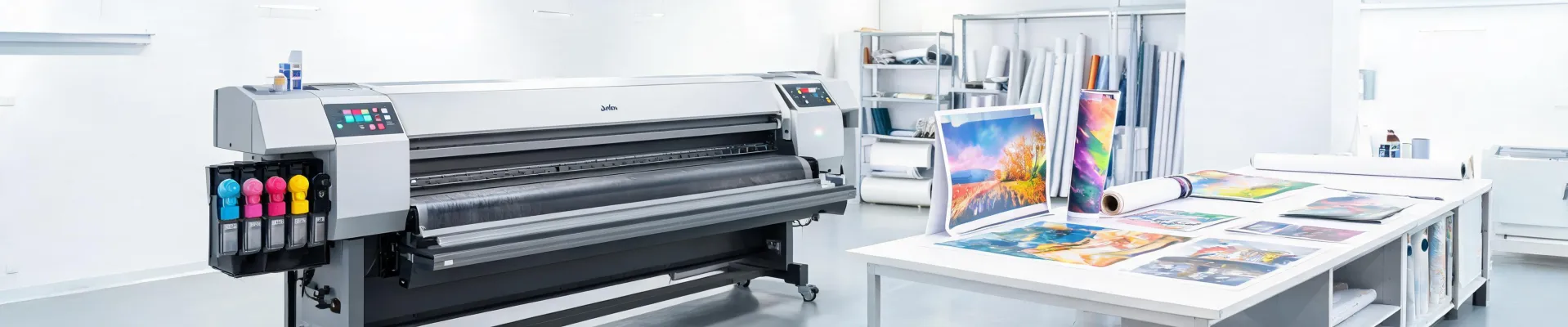
I went back and forth on this for three months. On paper, a Chinese flatbed for $18,000 looked amazing vs. a MUTOH XpertJet 1641SR at around $42,000. But after running a total cost of ownership (TCO) spreadsheet — including head replacement, ink waste, downtime, and resale value — the MUTOH saved us roughly $8,400 annually over three years. The cheaper machine had two head failures in year one alone. Bottom line: if you’re printing more than 50 sq ft per day, the premium pays off. Small shops with light volume? The cheap option might be fine. I learned that the hard way.
2. What’s the real XpertJet 1641SR price and what do you get?
Based on quotes from three certified MUTOH dealers in Q1 2025, the 1641SR base unit runs $38,000–$45,000. Add installation, training, and a starter ink kit — budget $50,000 installed. Now, here’s the thing: that price includes a full 3-year warranty on the printhead and labor. I initially thought that was standard. It’s not. When I compared to a similar-sized Roland ($43K base, 1-year warranty) the gap narrowed fast after factoring in extended support. The 1641SR’s rigid-roll hybrid capability is a game-changer if you do both rigid boards and roll media. Our switch to it cut job changeover time by 40%.
3. What about laser DTF printers — are they cheaper than MUTOH’s DTF solution?
I tested three laser DTF machines last year for our polyester garment line. The entry-level laser DTF printers (like the Procolored K13 at $2,500–$3,500) are tempting for small shops, but here’s the kicker: laser powder costs and yield loss ate into margins. Our MUTOH ValueJet 1638 DTF paid for itself in 14 months vs. 22 months for the laser unit. Plus, laser DTF requires a separate curing oven — that’s another $1,200–$2,000 expense. My cost tracking showed laser DTF actual ink+powder cost per print was $0.38 vs. $0.27 for MUTOH’s eco-solvent DTF. The “cheap” laser option actually cost us more in consumables.
4. Can a personal DTF printer like the Procolored K13 work for a startup?
It took me three years and about 50 orders to understand the difference between “personal” and “production.” The Procolored K13 13” is a great entry-level machine if you’re doing under 20 shirts a week. But don’t make the mistake I did: I bought one for my side business, then scaled to 100 shirts/week. The K13 got overloaded, and I had to pay for rush repairs twice ($350 each). Now I follow a rule: if your weekly volume exceeds 15% of the machine’s rated duty cycle, move up. For under $3,000, the K13 is a solid starter. But map out your growth plan first — that’s where I screwed up.
5. Why do so many small shops recommend MUTOH for flatbed?
When I was starting out, every forum said “buy MUTOH if you want reliability.” I thought it was brand hype. Then I audited our repair logs: over 24 months, the MUTOH flatbed required 2 calls vs. 8 for a competitor. Our downtime cost us $280/hour in lost revenue. Do the math. The conventional wisdom is that industrial equipment is all the same — my experience with 200+ orders suggests otherwise. The key is the part supply chain: MUTOH’s U.S. warehouse stocks dampers, capping stations, and printheads. I once got a damper next-day air when a competitor quoted 2 weeks. That relationship consistency beat marginal cost savings.
6. What hidden costs surprised you most when comparing MUTOH to off-brands?
I built a cost calculator after getting burned on hidden fees twice. First: many budget printers quote “free installation” but charge $1,200 for “site prep” (leveling, electrical). MUTOH dealers typically include site prep in the quote — ask. Second: ink cost per ml on cheap printers looks lower, but they require more ink changes and waste. We tracked ink usage for six months: MUTOH’s bulk system gave us 92% utilization; a competitor’s cartridges gave us 68% (lots of residual ink left in the cartridge). That was a 24% hidden premium. Third: resale value. I sold our 4-year-old MUTOH flatbed for $14,000. A comparable cheap printer would get maybe $3,000. That’s a $11,000 difference hidden in the end of life.
7. If I’m a one-person shop, should I even consider a MUTOH?
Small doesn’t mean unimportant — it means potential. I started with a MUTOH ValueJet 628 (entry-level roll printer) when I was doing $500/month. The vendor who treated my small order seriously is the one I still use for $15,000/month. For a one-person shop, I’d recommend starting with a MUTOH ValueJet 1638W (under $8,000) or a used XpertJet 1641SR (look for lease returns). Yes, it’s more than a personal DTF printer, but you’ll avoid the upgrade path that cost me $4,200 in switching costs. And if you need to produce samples for potential large clients, having a brand that “looks professional” matters. The H&Ms and local sign companies I sell to ask what printer I use. Worth every penny.
Prices as of April 2025; verify current rates with authorized dealers. Regulatory note: verify local safety and emission regulations for UV/DTF equipment per your state’s guidelines.

Elise Marceau
Elise Marceau is an LED display and digital-signage systems analyst covering LED video walls, modular screens, transparent LED, control processors, and indoor or outdoor signage. She applies IEC 62368-1 safety principles while comparing pixel pitch, luminance, contrast, refresh rate, colour uniformity, viewing angle, ingress protection, power density, module serviceability, and signal redundancy. Her specification guides help integrators, venue operators, retailers, and procurement teams align viewing distance, ambient light, content format, installation access, electrical load, and lifecycle support.