Mutoh Printers, DTF Transfers, and Food Printing: What I Actually Learned Managing a $120K Equipment Budget
2026-09-20 · Elise Marceau
-
Before You Scroll: What This Covers
-
Q1: Is Mutoh a Good Fit for a Mid-Size Print Operation?
-
Q2: What's Mutoh Support Actually Like?
-
Q3: What Type of Printer Do I Need for DTF Transfers?
-
Q4: Mutoh Vinyl Printers—Worth the Premium Over Cheaper Alternatives?
-
Q5: Inkjet Food Printers—Real Business or Gimmick?
-
Q6: What Hidden Costs Should I Expect With a Mutoh or DTF Setup?
-
Q7: Should I Buy a Used Mutoh Instead of New?
-
Q8: What Do Most People Get Wrong When Buying Printers?
Before You Scroll: What This Covers
I've been buying and maintaining wide-format printers for a 45-person print shop for about 4 years now. Our annual equipment and supplies budget runs around $120,000, and I've tracked every invoice in our procurement system since 2021. I'm not a printer technician—I'm the guy who signs the purchase orders and gets yelled at when something breaks down mid-job.
These are the questions I actually get from other shop owners and ops managers. No fluff, just what I've learned.
Q1: Is Mutoh a Good Fit for a Mid-Size Print Operation?
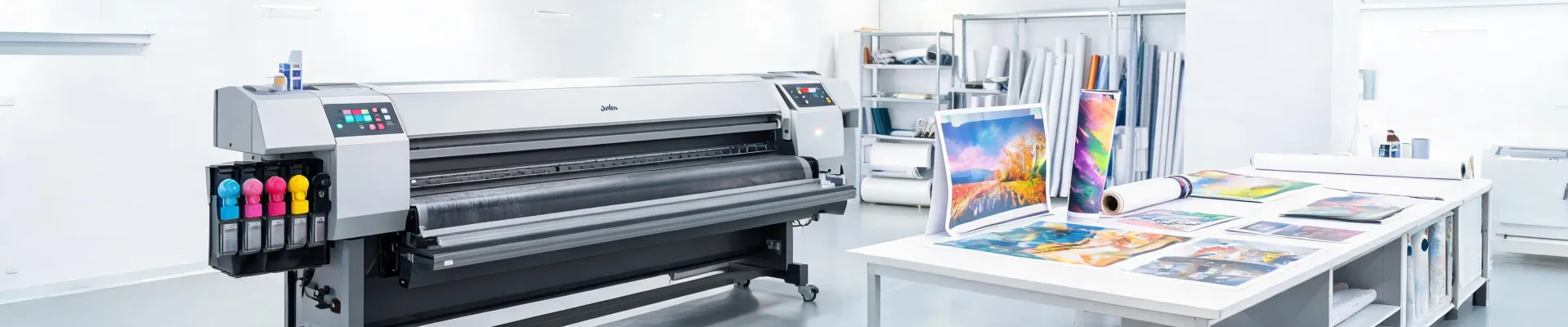
Depends on what you're running. For our shop—mostly signage and vehicle wraps with some textile work—the Mutoh ValueJet series has been solid. We bought our first one in 2022 and added a second in 2023. The eco-solvent side handles our vinyl output without drama, and the build quality is what I'd call industrial-grade without the industrial-grade price tag.
That said, "good fit" really means: does your service tech know the platform? We're lucky—there's an authorized Mutoh service center about 40 minutes away. If you're in a region where support is thin, factor that into your TCO. A machine is only as good as the nearest person who can fix it.
Q2: What's Mutoh Support Actually Like?
Here's the honest version: the regional distributor matters way more than the brand on the box. We've had two service calls in three years—one was a printhead issue, one was a firmware glitch after an update. Both resolved within 72 hours. The distributor we work with stocks common parts locally, which is why turnaround was fast.
But I've talked to shops in other states where "Mutoh support" meant waiting a week for a part to ship. So before you buy, ask the dealer: what's your local parts inventory? What's your average response time? Get it in writing if you can. The parent company's support infrastructure is fine—it's the last mile that varies.
Q3: What Type of Printer Do I Need for DTF Transfers?
Short answer: you need a dedicated DTF printer, not a converted eco-solvent machine. We tried the conversion route first—bad idea, cost us about $2,800 in wasted film and ruined transfers before we gave up.
The real decision is between brands. We looked at the Epson DTF platform (I think the F-series, but I'd have to check my notes) and a couple of Chinese-built options. The Epson was more expensive upfront but had a cleaner software workflow. We ended up going with a mid-range unit from a supplier our distributor recommended.
Key spec: make sure it handles 60cm width minimum and has a built-in powder shaker. Manual powdering is a time sink you'll regret.
Q4: Mutoh Vinyl Printers—Worth the Premium Over Cheaper Alternatives?
People think expensive printers deliver better quality. Actually, it's more nuanced. The expensive machines often have better consistency over long runs—which matters when you're printing a 50-foot wrap and the color can't drift halfway through.
We compared our Mutoh against a cheaper Chinese-made solvent printer in 2023. On a single 3-foot test print? Nearly identical output. On a 40-foot run? The cheap one started banding at around foot 25. That's the difference you're paying for.
If you only do short jobs, the premium may not pay off. If you do long-format work, it absolutely does.
Q5: Inkjet Food Printers—Real Business or Gimmick?
I looked into this seriously in 2024 because a bakery client asked about custom-printed cookies. Here's the thing: food-safe inkjet printing is a completely different regulatory category. You're dealing with FDA-compliant inks, dedicated machines that can't cross-contaminate, and a whole different maintenance schedule.
We passed. The volume wasn't there to justify a $15,000-20,000 machine that would sit idle 90% of the time. But if you're already in the food decoration space or you have a client with consistent volume, it can work. Just don't buy one thinking you'll "figure out the demand later."
Q6: What Hidden Costs Should I Expect With a Mutoh or DTF Setup?
A ton. Seriously. The quoted price is maybe 60% of what you'll actually spend in year one.
- Ink: Mutoh proprietary inks run $180-260 per liter depending on type. A busy month can eat 4-6 liters.
- Maintenance parts: Dampers, wipers, capping stations—budget $1,500-2,500/year.
- DTF film and powder: Roughly $0.80-1.20 per A3 sheet all-in.
- Training: If your operator has never run DTF, add 20-40 hours of paid learning time.
I built a spreadsheet after getting burned twice on underestimated consumable costs. It's saved us from at least two bad purchase decisions.
Q7: Should I Buy a Used Mutoh Instead of New?
Printheads are the single most expensive consumable. A replacement can run $2,500-4,000 installed. If the seller can't show you a nozzle check pattern, walk away.
We bought our second ValueJet used from a shop that was upgrading. Saved about $8,000 versus new. But I spent 3 hours testing it before handing over a check.
Q8: What Do Most People Get Wrong When Buying Printers?
It took me about 3 years and roughly 200 purchase orders to understand this: the printer is the cheap part. The ecosystem around it—service, parts, consumables, operator skill—is where the real money goes.
A $25,000 printer with no local service support will cost you more over 3 years than a $35,000 printer with a great distributor. I've seen it happen twice.
So before you compare spec sheets, call the service department. Ask how long a printhead replacement takes. Ask if they stock dampers. If they hesitate, that's your answer.

Elise Marceau
Elise Marceau is an LED display and digital-signage systems analyst covering LED video walls, modular screens, transparent LED, control processors, and indoor or outdoor signage. She applies IEC 62368-1 safety principles while comparing pixel pitch, luminance, contrast, refresh rate, colour uniformity, viewing angle, ingress protection, power density, module serviceability, and signal redundancy. Her specification guides help integrators, venue operators, retailers, and procurement teams align viewing distance, ambient light, content format, installation access, electrical load, and lifecycle support.