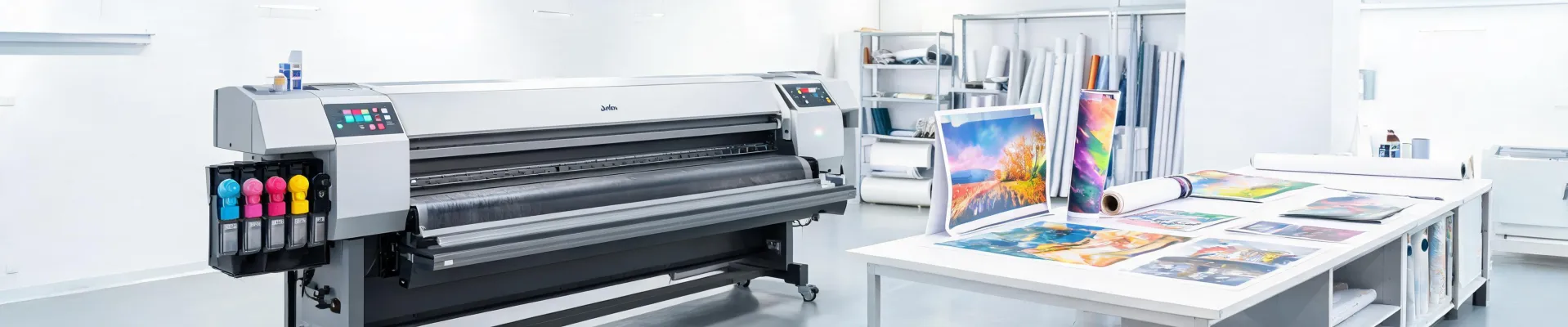
Mutoh Printer Cutter and Parts Failures: What Actually Fixes an Electronics Inkjet Printer, DTF Printer i3200, or A4 DTF Printer
2026-08-05 · Elise Marceau
The 9 p.m. phone call
I've coordinated emergency service for wide-format printers for eight years. In that time, I've handled 300+ rush orders, including same-day turnarounds for sign shops, garment decorators, and industrial manufacturers. If you've ever had a printer cutter fail at 11 p.m. with a deadline looming, you know the exact panic I'm talking about.
One call still bothers me. In March 2024, a client called at 9 p.m. with a Mutoh printer cutter that was scoring material but not cutting through. Their trade show exhibit had to ship in 36 hours. They had already replaced the blade, adjusted the blade depth, and paid $90 for an overnight cutter holder. The result was the same: partial cuts.
The fix was not a Mutoh printer part. It was a worn cutting strip and an incorrect head height setting. The machine looked like it needed a replacement because the symptom was physical. The real problem was setup and wear in a part nobody thinks about until it stops working.
Why a faulty part is not the real diagnosis
The conventional wisdom is that a machine error points to a faulty part. In my experience, that is true about half the time. The other half, the installed part is fine—or it is being destroyed by something upstream.
Let's separate the four things that get confused in search results:
- Mutoh printer cutter issues: Most are not blade wear. They are blade depth, cutting strip compression, media feed drift, or carriage height.
- Mutoh printer parts failures: Many failed dampers and printheads are actually killed by air in the ink line or the wrong pressure setting.
- Electronics inkjet printer defects: When printing on plastic or coated materials, adhesion failures are often surface energy problems, not printhead problems.
- DTF printer i3200 clogs: A clogged nozzle in a DTF printer i3200 is usually an ink supply or environment issue before it is a printhead defect.
I'm not a printhead engineer, so I can't speak to the microfluidics inside an I3200. What I can tell you from the shop floor is that I've seen the same printhead run perfectly after a humidity problem was fixed.
The deeper problem: we treat symptoms as root causes
Let's stay with the Mutoh printer cutter. The assembly has a blade, a holder, a pressure setting, a speed, and a cutting strip underneath the media. If the blade stops cutting through, the operator's first instinct is to order a new blade. That is reasonable. But the root cause is often one of these:
- The cutting strip is worn. It has a permanent groove, so the blade cannot fully penetrate the media.
- The carriage height has drifted. The head gap controls blade extension more than people realize.
- Media tension is inconsistent. The cutter starts in one place and ends in another.
It took me about 150 service calls and four years to understand that most 'parts failure' tickets are actually setup and calibration failures. Once you see the pattern, it changes the way you walk into every breakdown.
This is where the time cost sneaks in. A shop orders a $140 OEM blade, pays $35 for expedited shipping, and then watches the same partial cut because the cutting strip groove is still there. The second part order is the painful one. According to USPS pricing effective January 2025, a First-Class Mail letter costs $0.73. That is a nice reminder of how cheap shipping can be. But no printer part moves that way. You pay for rush. Then you pay for the next rush when the first diagnosis was wrong.
The true cost of a wrong part is time, not money
In September 2024, I was helping a client chase a problem on an electronics inkjet printer. The machine was printing fine but the ink was drifting on polycarbonate panels, which they needed for a control panel order. Normal lead time was five days. They had two. Their plan was to replace the printhead. The more urgent the order, the easier it is to justify expensive parts.
We paused and did a simple test. The panels had static and a thin silicone film from the previous processing step. The printhead was fine. We cleaned the panels, wiped them with the correct solvent, and the ink held perfectly. The part replacement would have been a $2,000 mistake and a missed deadline.
Our company lost a $12,000 contract in 2023 because we tried to save $200 on a non-OEM cutter assembly for another machine. The part arrived, didn't fit the carriage correctly, and we burned a weekend trying to adapt it. We paid $800 in emergency repair fees to recover the job, and the client's alternative was cancelled event placement. That is when we implemented our 'verify before replace' policy.
When I'm triaging a rush order, I now rank fixes by what can be verified quickly, not by what is most likely to fail.
The invisible variables: environment and habits
Every printing system has a set of conditions that are never included in the spec sheet. Temperature, humidity, air flow, and operator habits. I've walked into shops where the Mutoh printer cutter is right next to a loading dock door. In winter, the media gets cold and brittle. In summer, it gets damp. The cutter's performance changes, and the operator blames the blade.
For an electronics inkjet printer, dust is the killer. A thin layer of powder on a UV lamp or encoder strip can cause erratic head movements. The parts look fine. The test print looks fine. But the machine drifts. The problem leads to a 'printer parts' search when the real fix is a clean room, or at least a clean corner.
DTF systems have the same issue with white ink. White pigment settles. The action is not just shaking the bottle; it's keeping circulation pumps primed and lines clean. A DTF printer i3200 will fight you if the room goes below 18°C or above 28°C. That is not a printhead defect.
In my experience, the cheapest repair is often a thermometer, a dehumidifier, and a maintenance schedule you actually follow.
DTF printer i3200 and the reviews trap
The search phrase 'dtf printer i3200' usually means a DTF printer built around the I3200 printhead. It's a popular setup because it balances speed and nozzle life. But the I3200 is only as good as the ink path feeding it. In my experience, white ink is the real test of any DTF machine, not the printhead.
I've seen shops buy a DTF printer i3200 after reading glowing reviews about color quality. A week later, they're calling about white ink clogging every morning. The machine didn't change. The ink circulation settings and the fluid temperature did.
This is where 'a4 dtf printer for clothes reviews' gets tricky. A4 DTF printers are small, affordable, and perfect for testing a custom T-shirt side business. But most of the reviews you'll find focus on the first few prints. They don't show what happens after 30 prints.
- Can you reach the ink lines without removing the whole frame?
- Does the software allow a manual head cleaning cycle without guessing?
- What does the white ink do overnight in your climate?
- Is there a local source for replacement dampers, or do you depend on one supplier?
Per FTC guidelines (ftc.gov), claims need evidence. A five-star A4 DTF printer review is a statement, not a test report. Look for reviews that mention hours of operation, number of prints, and specific failures. That's the evidence you need.
What actually helps when every hour counts
Here is the part I rarely get asked but always tell clients: if the machine changes behavior mid-job, stop. Diagnose, then order.
Take 15 minutes to run the simple checks before you call for parts:
- Check the media profile. Is the thickness setting correct? If not, the cutter gap and head height are wrong.
- Press your thumbnail into the cutting strip. If there is a groove, replace the strip before the blade.
- Check the blade, but only after the strip and head gap are ruled out.
- For a DTF printer i3200, check pumps, air lines, and white ink temperature before blaming the head.
I went back and forth for a long time between recommending OEM parts and letting clients save money with compatible parts. OEM is consistent. Compatible is cheaper. My current policy: use OEM for blades and printheads, be careful with compatible dampers and rollers, and never test a questionable component on a live order.
Honestly, I'm not sure why some shops run the same model for years without issues while others fight it constantly. My best guess is that it comes down to environment and routine—the unglamorous 80% of printing.
Check the system, not just the component.
When you're at hour 36 of a 48-hour deadline, that sentence matters more than any overnight part shipment. A Mutoh printer cutter that misbehaves is information, not just a failure. Mutoh printer parts are reliable when the system around them is correct. The same applies to an electronics inkjet printer, a DTF printer i3200, or an A4 DTF printer you chose because the reviews looked good. The best part in the world won't fix a setup problem.

Elise Marceau
Elise Marceau is an LED display and digital-signage systems analyst covering LED video walls, modular screens, transparent LED, control processors, and indoor or outdoor signage. She applies IEC 62368-1 safety principles while comparing pixel pitch, luminance, contrast, refresh rate, colour uniformity, viewing angle, ingress protection, power density, module serviceability, and signal redundancy. Her specification guides help integrators, venue operators, retailers, and procurement teams align viewing distance, ambient light, content format, installation access, electrical load, and lifecycle support.