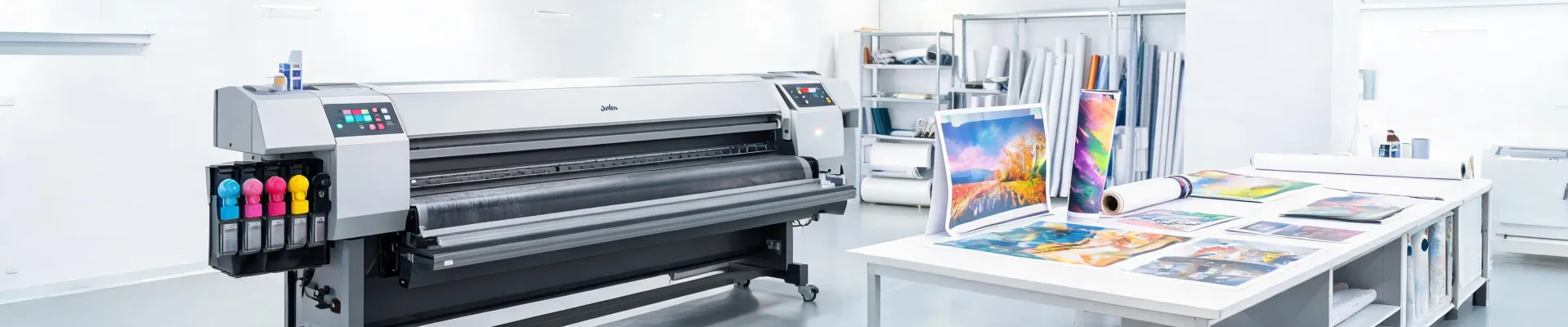
Mutoh, DTF, and UV Sticker Costs: A Procurement Manager's FAQ
2026-09-11 · Elise Marceau
-
What is a DTF printer and how does it work?
-
How much should I budget for a Mutoh XpertJet 461UF?
-
What does Mutoh printer repair service actually cover?
-
Can I use a UV printer for stickers?
-
Is a DTF XTool printer a good fit for a small shop?
-
Why is the cheapest quote often the highest total cost?
-
What hidden costs should I track for wide-format printers?
-
What does Mutoh printer repair service cost annually?
I’m a procurement manager at a 38-person print service provider. I’ve managed our equipment and repair-parts budget—about $220,000 annually—for seven years. I’ve negotiated with 20+ vendors and tracked every order in our cost system. So when people ask about Mutoh printers, DTF, or UV stickers, I look at the invoice, not the brochure.
Here are the questions I hear most from sign shops, garment decorators, and industrial manufacturers. Short answers, real cost math.
What is a DTF printer and how does it work?
A DTF printer prints a design onto a special PET film using pigment inks, then applies hot-melt powder to the wet ink. You cure the powder, place the film on fabric, and press it with a heat press. The ink transfers to the garment—usually cotton, polyester, or blends. No weeding, no pre-treatment for most fabrics. That’s the appeal.
But the cost isn’t just the printer. You need film, powder, ink, a shaker/curing unit, and a heat press. In Q2 2024, I priced a DTF setup for our 12-person satellite shop. The printer was the small line item. Film and powder made up 40% of the first-year consumables budget. Bottom line: DTF is flexible, but it’s a system purchase, not a box purchase.
How much should I budget for a Mutoh XpertJet 461UF?
Pricing for the Mutoh XpertJet 461UF is usually quote-based. As of Q1 2025, expect a ballpark in the mid-five figures for a new unit—before installation, RIP, training, and freight. Some dealers bundle those; some don’t. I’ve seen ‘free installation’ offers that quietly added $2,800 in crating and rigging (which, honestly, felt excessive).
Don’t stop at the machine price. Add: electrical work, ventilation, a RIP license, media, spare dampers, and a maintenance kit. For our shop, the accessories and site prep ran 18% over the printer’s quoted price. That’s not a deal-breaker—just plan for it. Verify current pricing with an authorized Mutoh dealer, because rates move.
What does Mutoh printer repair service actually cover?
It depends on the contract. Some service agreements cover parts and labor; others cover labor only. I learned never to assume ‘full coverage’ means what I think it means after a printhead issue in 2023. The quote said ‘parts included’ but excluded consumables like dampers and wiper blades. That ‘free’ service call cost us $450 in excluded parts.
Saved $80 by skipping expedited shipping on a damper kit. Ended up spending $400 on rush reorder when the standard delivery missed our deadline. Ask three questions: Which parts are excluded? What’s the response-time guarantee? (Not that we ever got one without asking twice.) Is travel billed separately? A good Mutoh printer repair service should give you a written SLA. If the vendor hesitates, that’s a red flag. We now require a line-item list of exclusions before signing any repair contract.
Can I use a UV printer for stickers?
Yes—UV flatbed printers like Mutoh’s can print directly onto sticker media, vinyl, and rigid substrates. That’s a no-brainer for short-run, custom shapes, or thick materials. But the cost per sticker changes fast with size, ink coverage, and whether you laminate.
Color matters too. Industry standard color tolerance is Delta E < 2 for brand-critical colors. Delta E of 2-4 is noticeable to trained observers; above 4 is visible to most people. Reference: Pantone Color Matching System guidelines. If you’re printing logo stickers for a national brand, budget for color proofing. For standard print resolution, 300 DPI at final size is the commercial standard; large-format stickers viewed from a distance can often use 150 DPI. That resolution choice affects ink use and speed—and your TCO.
Is a DTF XTool printer a good fit for a small shop?
Maybe. I went back and forth between a DTF XTool printer and a used Mutoh DTF setup for two weeks. XTool offered a lower entry price and a compact footprint. The Mutoh route offered wider media and better service support. Ultimately, we chose the wider machine because our garment clients wanted 24-inch transfers, not 13-inch.
To be fair, the XTool option is competitive for small, standard-size jobs. But check film width, ink cost per milliliter, and whether you can get parts locally. The ‘cheap’ option resulted in a $1,200 redo for us when a batch failed adhesion—not the printer’s fault, but the consumables we paired with it. Hours of trial-and-error have a cost, even if they don’t show on an invoice.
Why is the cheapest quote often the highest total cost?
Everything I’d read about vendor selection said the lowest bid wins. In practice, I found the opposite for industrial printers. The $500 quote turned into $800 after shipping, setup, and revision fees. The $650 all-inclusive quote was actually cheaper.
TCO includes unit price, freight, installation, training, consumables, downtime, and risk. Over the past seven years, I’ve tracked every invoice. When I audited our 2023 spending, 22% of our ‘budget overruns’ came from rush parts and expedited shipping. We implemented a standard spares kit policy and cut overruns by 14%. So when you compare Mutoh printer repair service or a DTF printer, build a TCO spreadsheet. The lowest line item rarely wins.
What hidden costs should I track for wide-format printers?
Track these: ink yield per square foot, media waste, printhead life, damper replacement, daily maintenance time, and downtime. I’ve seen shops brag about a cheap printer then spend $8,400 annually on rushed parts and lost jobs. Switching to a vendor with better local support saved us that amount—17% of our service budget.
Also track soft costs. A five-minute daily cleaning routine sounds minor until it saves a $2,000 printhead. And a reliable Mutoh printer repair service isn’t an expense; it’s insurance against missed deadlines. Put a dollar value on your production hour. Once you do, the math usually points to reliability over the lowest sticker price.
What does Mutoh printer repair service cost annually?
For our shop, a service contract on two Mutoh wide-format printers ran $3,200 per year per machine as of 2024. That covered preventive maintenance and labor, but not printheads. Printheads can be $1,500–$3,000 each, depending on model. So the contract is only half the story.
We set aside a separate consumables and parts fund—about 8% of the printer’s original purchase price per year. That fund covers dampers, wipers, cap tops, and the occasional printhead. If a vendor promises ‘zero maintenance,’ that’s a red flag. All industrial printers need maintenance. The question is whether you budget for it or get surprised by it.

Elise Marceau
Elise Marceau is an LED display and digital-signage systems analyst covering LED video walls, modular screens, transparent LED, control processors, and indoor or outdoor signage. She applies IEC 62368-1 safety principles while comparing pixel pitch, luminance, contrast, refresh rate, colour uniformity, viewing angle, ingress protection, power density, module serviceability, and signal redundancy. Her specification guides help integrators, venue operators, retailers, and procurement teams align viewing distance, ambient light, content format, installation access, electrical load, and lifecycle support.