How to Buy a Mutoh Printer Without Regret: A Cost Controller's 5-Step Checklist
2026-07-22 · Elise Marceau
-
Step 1: Define Your Workload — What Exactly Will You Print?
-
Step 2: Research the Specific Models (and Download the Manual)
-
Step 3: Get Quotes and Calculate Total Cost of Ownership (TCO)
-
Step 4: Evaluate Ink and Consumable Costs Over 3 Years
-
Step 5: Verify After-Sales Support and Parts Availability
-
Common Mistakes (And How to Avoid Them)
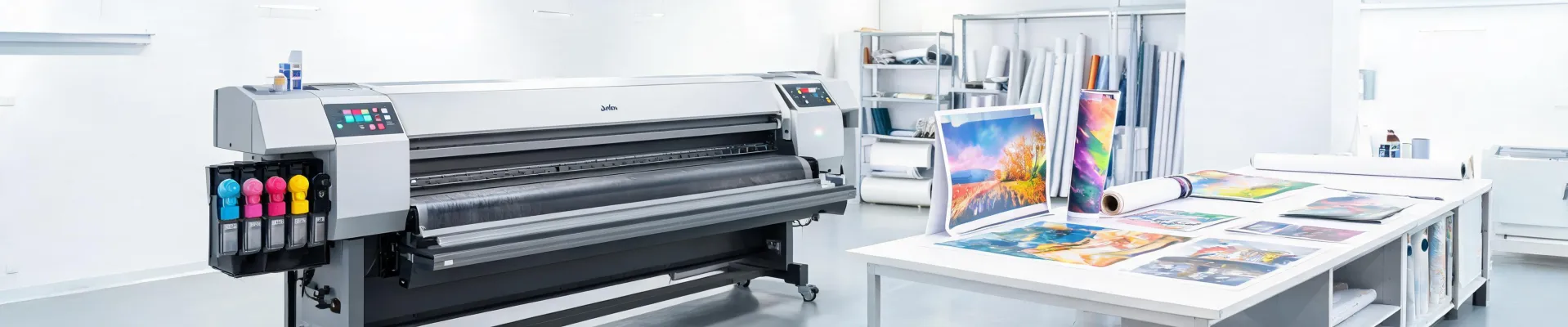
If you're shopping for an industrial wide-format printer — UV flatbed, eco-solvent, DTF, or sublimation — you've probably seen the Mutoh lineup. Maybe you're eyeing the XpertJet 461UF for A1 UV printing, or a ValueJet for roll-to-roll work. The question is: how do you compare quotes and avoid the pitfalls that eat into your budget?
I manage procurement for a mid-size print shop. Over the past six years, I've tracked every equipment purchase in our cost tracking system — $180,000+ cumulative spend on printers and parts. I've negotiated with a dozen vendors and made enough mistakes to know what matters. This checklist is built from that experience.
It's for anyone who's about to buy a Mutoh (or any industrial printer) and wants to make sure the decision holds up three years from now. There are five steps. If you skip any, you're gambling.
Step 1: Define Your Workload — What Exactly Will You Print?
This sounds obvious, but I've seen shops buy a UV flatbed because it's 'versatile,' then realize 80% of their jobs are DTF transfers. Match the printer technology to your primary output:
- UV flatbed (like XpertJet 461UF): Rigid materials — acrylic, aluminum composite, corrugated plastic. Good for signage, POS displays, A1-sized panels.
- Eco-solvent (ValueJet series): Roll-fed banners, vehicle wraps, decals. Outdoor durability.
- DTF printer: Transfer designs onto fabrics using film and powder. Fast-growing for garment decoration.
- Sublimation printer: Prints on transfer paper, then heat-pressed onto polyester or coated items (mugs, phone cases, fabrics). (What can you print with a sublimation printer? Basically anything polyester-based or with a polymer coating — apparel, home decor, promotional items.)
Write down your top three job types by volume. That's your primary tech. Don't let a 'cool feature' distract you from the work you actually do.
Step 2: Research the Specific Models (and Download the Manual)
Once you know the technology, dig into the model details. For Mutoh, the manual is your best friend. Search for "mutoh drafting machine manual" or the specific model manual (e.g., XpertJet 461UF user guide). I always download the PDF and scan these sections:
- Media thickness and size limits
- Ink types compatible (genuine vs. third-party)
- Print head specifications (piezo, resolution, number of heads)
- Warranty terms and maintenance intervals
I almost bought a model once that couldn't handle the 1/2" thick acrylic we use (note to self: check the media path clearance before signing). The manual would have told me that in five minutes.
Step 3: Get Quotes and Calculate Total Cost of Ownership (TCO)
The price tag is only the beginning. When you ask for quotes, build a spreadsheet with these line items:
- Base machine price
- Delivery and installation (some vendors hide rigging fees)
- On-site training (if not included, budget $1,500–$3,000)
- Initial consumables kit (ink cartridges, cleaning solution, maintenance kit)
- Extended warranty or service plan (year 2–3 pricing)
- Spare parts accessibility (printheads, dampers, caps — Mutoh parts are widely available from distributors)
Price reference: Based on quotes collected from three distributors in Q1 2025, an industrial UV flatbed in A1 size (like the XpertJet 461UF) typically ranges from $85,000 to $110,000 with standard configuration. If you see a quote far below that, check what's excluded. The cheapest option on paper often isn't the cheapest total cost.
I once compared two vendors: Vendor A quoted $92,000 all-in with training and a 3-year warranty. Vendor B quoted $84,000 but added $4,200 shipping, $1,800 for training, and a $7,500 extended warranty. Total? $97,500. The 'cheap' quote was $5,500 more in real terms. That's a 6% difference hidden in fine print.
Step 4: Evaluate Ink and Consumable Costs Over 3 Years
Ink is where the money goes. Mutoh uses its own ink formulations — genuine ink costs more upfront but is optimized for print head life and color consistency. Third-party ink can save 30–50% per liter, but I've seen the downsides firsthand.
Real story: We saved $2,000 in our first year using third-party UV ink. By month 14, two printheads clogged beyond cleaning. Replacement heads: $4,800. Plus labor and downtime. Net loss: $2,800. The 'budget' ink cost us more than the genuine ink would have.
For DTF printer process, don't forget the cost of PET film, hot-melt adhesive powder, and shake powder. For sublimation, factor in transfer paper and heat press maintenance. Add these up for a 3-year projection. A common mistake is to only look at the printer price and ignore the ongoing consumables burden.
Step 5: Verify After-Sales Support and Parts Availability
Mutoh has a solid network of authorized service centers and parts distributors. But not all reps are equally responsive. Before committing, ask for references from other shops using the same model. Confirm:
- Technical phone support hours (24/7 or business hours?)
- Average response time for a service ticket
- Stock levels of critical parts (printheads, dampers, main boards)
- Whether you can buy an extended service contract beyond year one
I once skipped this step. I said "standard warranty is fine." The vendor heard "we'll call only if something breaks." When the printer went down in month 13, the extended service plan I thought we had didn't exist. We paid $2,500 for an emergency technician visit. And then waited 2 weeks for a part (note to self: always clarify the exact terms in writing).
Common Mistakes (And How to Avoid Them)
After going through this process multiple times, here are the pitfalls I see most often:
- Only looking at the machine price. TCO is everything. Use the checklist above to build your spreadsheet.
- Assuming all printers in a category are the same. Mutoh's build quality and support setup differ from Epson or Roland. That's not a knock — just a fact. The right choice depends on your volume, material, and willingness to self-service.
- Underestimating the learning curve. DTF and sublimation processes require practice. Factor in a month of lower productivity while your team gets comfortable.
- Ignoring connectivity and software. Make sure the printer works with your RIP software (RasterLink, ONYX, etc.). Some hidden integration costs show up here.
Risk weighing: The upside of buying a current-generation model (say, XpertJet 461UF) is higher productivity and better print quality. The risk is a bigger upfront investment. I keep asking myself: is $95k worth potentially locking me into a technology that might evolve in two years? For us, the answer was yes because our primary jobs (rigid signage) aren't changing fast. But if you're in a rapidly shifting market, consider leasing or buying a slightly older model at a discount.
That's the checklist. An informed customer asks better questions and makes faster decisions. Take the time to compare TCO seriously — your next printer purchase will thank you.

Elise Marceau
Elise Marceau is an LED display and digital-signage systems analyst covering LED video walls, modular screens, transparent LED, control processors, and indoor or outdoor signage. She applies IEC 62368-1 safety principles while comparing pixel pitch, luminance, contrast, refresh rate, colour uniformity, viewing angle, ingress protection, power density, module serviceability, and signal redundancy. Her specification guides help integrators, venue operators, retailers, and procurement teams align viewing distance, ambient light, content format, installation access, electrical load, and lifecycle support.